website watertownhistory.org
ebook History of Watertown, Wisconsin
Timothy Johnson
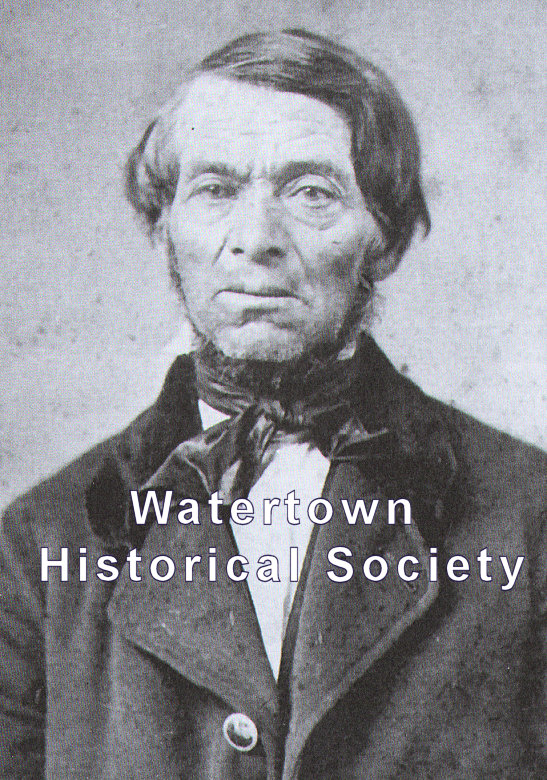
Society
holding / Click to enlarge
The Johnsons Reunited:
Family of city's first citizen arrives
Road to Oconomowoc constructed
Article
from the Jan 22, 1851 issue of the Watertown
Chronicle
Personal account of early Watertown,
written by Timothy Johnson,
the first white settler [1836] of what
is now Watertown
During the same summer I cut a
road, with the assistance of three hired men - Philander Baldwin, Reeve
Griswold and Charles Seaton - from Jefferson to Watertown, on the east side of
the river, and one from Jefferson to a point near the present tavern stand of
Austin Kellogg, in the town of Concord. Striking the extensive tamarac swamp
there, which we regarded as impassable, we abandoned our intention of opening a
road to Milwaukee.
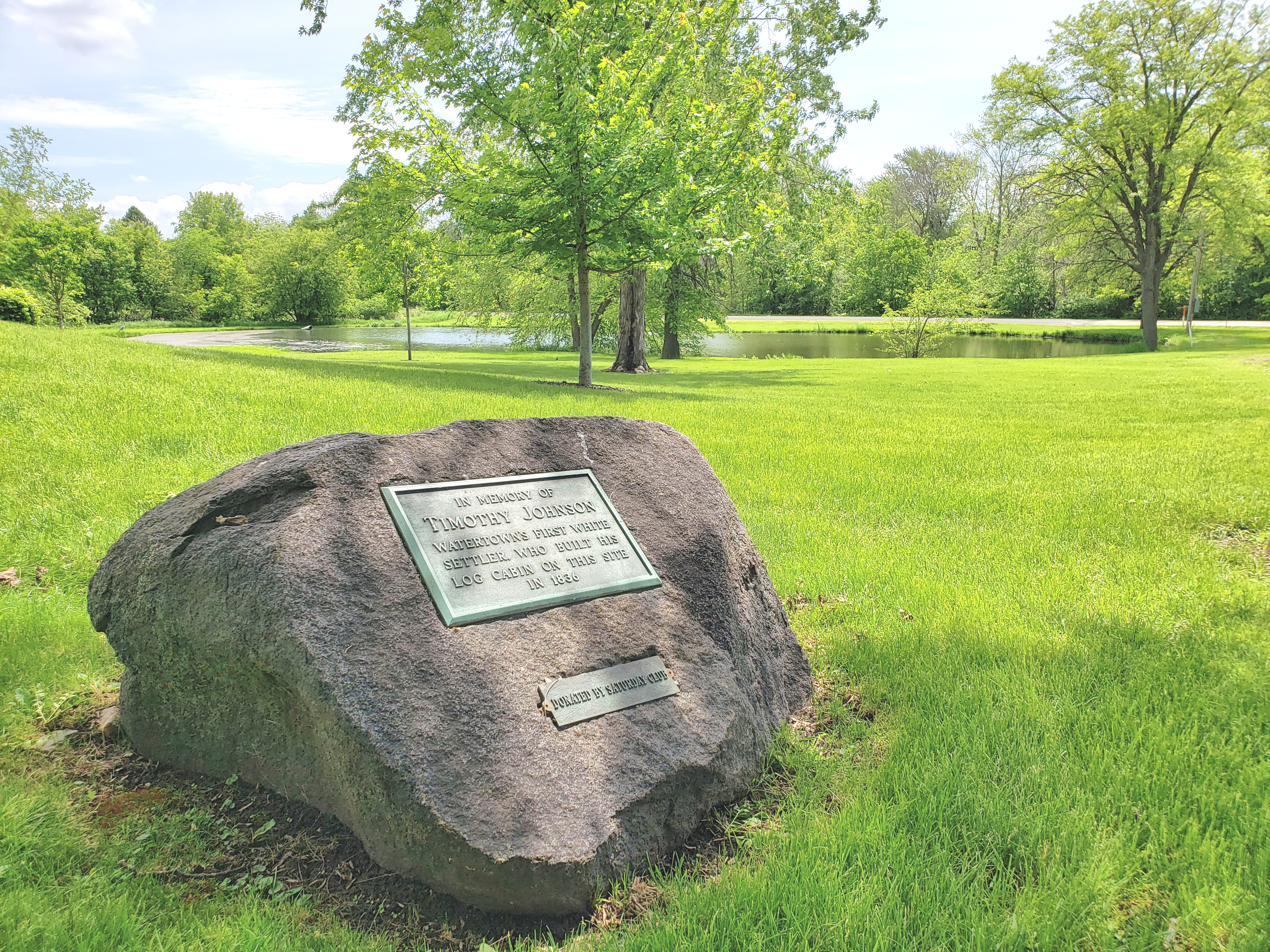
During the summer I built a cabin
within the present village of Watertown, and erected the body and laid the
floor of the log house now standing on my farm, on the west side of the river,
about three fourths of a mile south of the village.
In the fall I sent for my family.
About the time I expected them to arrive at Milwaukee I started for that place
on horseback, following the Indian trails through lxonia, Oconomowoc and
Summit, to Prairieville. I do not think that any white man had previously
passed over that route. There was at that time no inhabitant between Watertown
and Prairieville. Having been thrown from my horse in fording the Oconomowoc
River, wetting me to the skin and rendering useless my fire matches, I passed a
cold, comfortless night encamped by the side of a log near the junction of the
Twin Lakes.
On reaching Milwaukee, I found my
family had been there two days. I hired a man to carry them to Prairieville,
where they remained about four weeks. I then hired their conveyance to the
upper lake, on the Oconomowoc. At that
place I and my men dug out five poplar canoes, each 31 feet long, and l
shrouded them together, and built a red cedar raft capable of bearing two or
three tons weight, expecting to find little or no difficulty in floating them
down the Oconomowoc and Rock to Watertown, with my family, furniture and
provisions. But I was mistaken. - As we passed out of the lake, we found the
water quite shallow, and some days did not travel to exceed 80 rods.
We camped nights on the shore,
and usually cooked provisions enough to last us through the following day. We
reached the head of the lower lake, where the village of Oconomowoc now stands,
on the night of the fifth day after leaving the upper lake. That night was
intensely cold, and in the morning we found the lake covered with ice strong
enough to bear a man. Of course, we were compelled to abandon our expectations
of reaching Watertown by water.
So leaving my family in a tent
under charge of one of my men, (Mr. Griswold) I and Miller started for
Watertown after my ox team, to convey my family thither, by land. Returning to
Oconomowoc with the team, I took my family and a portion of my goods, and
started for Watertown. At a stream now known as Battletown Creek, about three
miles from Oconomowoc, we found it necessary to build a cabin for our
accommodation, until we could bridge that stream. We were thus detained three
or four days. We also cut the road all the way from that point to Watertown,
which place we were three weeks and three days in reaching, from the time we
left Prairieville. The road thus opened was the only one traveled between
Watertown and Prairieville for many years; and for a long time was the cabin
alluded to, the only building on the road.
Battletown Creek received its
name from the following incident: A little difficulty occurred at the cabin one
night, while we were building the bridge, between one of my men by the name of
Gardner and myself, ending in a "clinch" in which I obtained the
advantage of my antagonist. No blood was spilt, however, nor bones broken. The
next morning one of my men wrote with a piece of red chalk, on the top of a
stump near the cabin, "Battletown."
The creek thus took its name, which it has borne ever since.
I might have stated before, that
my family landed at Watertown on the night of the 10th of December, 1836. Mrs.
Johnson was the first white woman who settled in that town.
I must pass over a number of
incidents which I had intended to weave into this narrative. Two only have I
time to give.
In Jan. 1837, I bought a load of
provisions at Milwaukee. One barrel of flour I could not get into my shantee,
and left it for the night by the door. In the morning it was gone, as also a
bed cord I had used to bind the load. I could easily determine from the tracks
in the snow, that the thieves were Indians. I followed their track nearly to
the present village of Lowell, but not overtaking them, I gave up the chase.
About two years afterward I
ascertained the name of the mover in the theft. He said that he and his company
lashed two poles together with the bed cord, a foot or so apart, and lashing
the poles to the pack saddles of two ponies, placed the flour upon the kind of
rack thus formed. From the vicinity of Lowell, they took a turn east and did
not unload the flour until then reached Hustis' Rapids. The reason he assigned
for the theft was, that while I was in Milwaukee after my provisions, he had
sold a pony to my son for five gallons of whiskey and alleging that the article
had been watered he maintained that the flour would no more than make good the
supposed cheat!
In the spring of 1837, six
drunken Indians and their squaws came to my log house and asked for whiskey,
saying, in their native language that they were "whiskey
hungry." I refused to let them have
any. This exasperated them, and one of
their number catching up an ax, aimed a blow at my head but I warded it off,
and jerking the ax from him, threw it at some rods distance. I then seized a pitchfork, and striking him
over the head, felled him to the ground.
Drawing to strike again, the instrument was caught by the remaining five
Indians, and neither party was able to wrench it from the other. Letting go with my right hand, I used my fist
upon the "red skins," and knocking them all down, rushed into the
house and bolted the door. One of the
Indians got the ax, and approaching the door, gave it a blow which is visible
to this day. I told him I would
assuredly shoot him if he broke in the door.
A consultation took place between
them, and picking up the Indian whom I had first struck, they departed, and
encamped for the night near the present residence of Wm. M. Dennis. Early the
next morning, the father of the wounded Indian visited me and said he wanted
some whiskey to wash his papoose’s head,
as he was "much hurt." I told him he could not have the whiskey but
that I would go up and see the fellow. I did so, and found the camp 30 strong.
I examined the skull and found it was not broken, although it had been laid
bare by the blow. I assisted in dressing the wound and left. - Had not the
father of the young man voluntarily proclaimed that he was a "bad
pappoose" this difficulty might have been attended with serious
consequences. As it was, l heard no more
of it.
The Old Pioneer
takes one journey more
Watertown
Gazette of 10 23 1913, “Watertown 57
Years Ago,”
reprint of article from 10 23 1856
issue of the Watertown Gazette.
This week, Timothy
Johnson, the first settler of Watertown, leaves this city for his new and far
northwestern home, near the frontier boundary of the state, on Wolf creek — a
beautiful stream with a valuable water privilege, on whose banks he has
selected his final residence, and which flows into the Mississippi.
At a time of life when
most men seek retirement and repose, the Old Pioneer forsakes the spot he has
seen rise from beginning when himself the only white man on it to a place of
ten thousand inhabitants, and goes to a distant country, primitive as undisturbed
nature can make it, there again, in the midst of the new world of strange
scenery that will surround him, to commence the work of introducing another and
better order of things.
An emperor of
long-fallen Rome once said that he came to a city built of straw and left it
built of marble. Our still surviving
founder can make a nobler boast than that he came here twenty years ago and
beheld a wilderness without a city, and now, after having laid its foundations
and watched over its growth thus far, he leaves a city without wilderness — a
city rich in all the resources of civilization, and gradually drawing around
itself whatever has a tendency to elevate and refine an enlightened community.
In thus bidding
farewell to a fellow townsmen whose name has always been so intimately
identified with the city within whose limits he was the first to make a
permanent home, it may be appropriate to give a short sketch of one whose
familiar presence we shall soon miss.
Timothy Johnson was
born in Middleton, Middlesex County, Connecticut, on the 28th of June, 1792,
and is consequently now in the sixty-fifth year of his age. When only ten years old, he came with his
parents to Turin, Lewis County, New York, then a new country, and just
beginning to be broken into by the increasing tide of New England
settlers. In 1811, he was on the ground
where Rochester now stands, which then contained only one house — all else
being a vast and untenanted solitude.
In 1816, he removed to
Montville, in Medina County, Ohio, which state was then the favorite resort of
such as sought new homes in the West.
Here he remained for twenty years, following ordinary pursuits, until
the stories of a new, beautiful and fertile land beyond Lake Michigan began to
be rumored abroad and excite his restless curiosity, ever on the lookout for
something novel, exciting and adventurous.
The fame of Wisconsin
at length reached his ears, and he resolutely determined to explore its
magnificent forests, broad prairies and lovely lakes for himself. He visited various portions of it, and for
weeks was a solitary roamer over its then untraveled surface. He threaded the valley of the Rock River, and
was unsatisfied until his eye rested on the ground on which the city of
Watertown has sprung into existence. His
quick and sure observation told him that here was a place that combined all the
elements of a flourishing town. Here was
an ever-flowing stream, capable of being turned to various manufacturing
purposes on the most extensive scale; here was a soil certain to yield the
largest and finest crops; here were extensive ranges of heavy timber, ready to
be transformed into good building material; here was a mild, healthy,
delightful climate. What more could any
one desire who was longing for an unoccupied field of enterprise?
1836
On the 10th of
December, 1836, he pitched his tent here in the midst of the falling snow and a
hundred Winnebago wigwams. He has lived
here ever since — a kind-hearted and obliging neighbor, ever ready to extend a
helping hand and relieve distress — an active and liberal minded man — a useful
and respected citizen. The Indians who
made this their charmed resort have disappeared, and the Anglo Americans have
taken possession of their lands. All has
been changed.
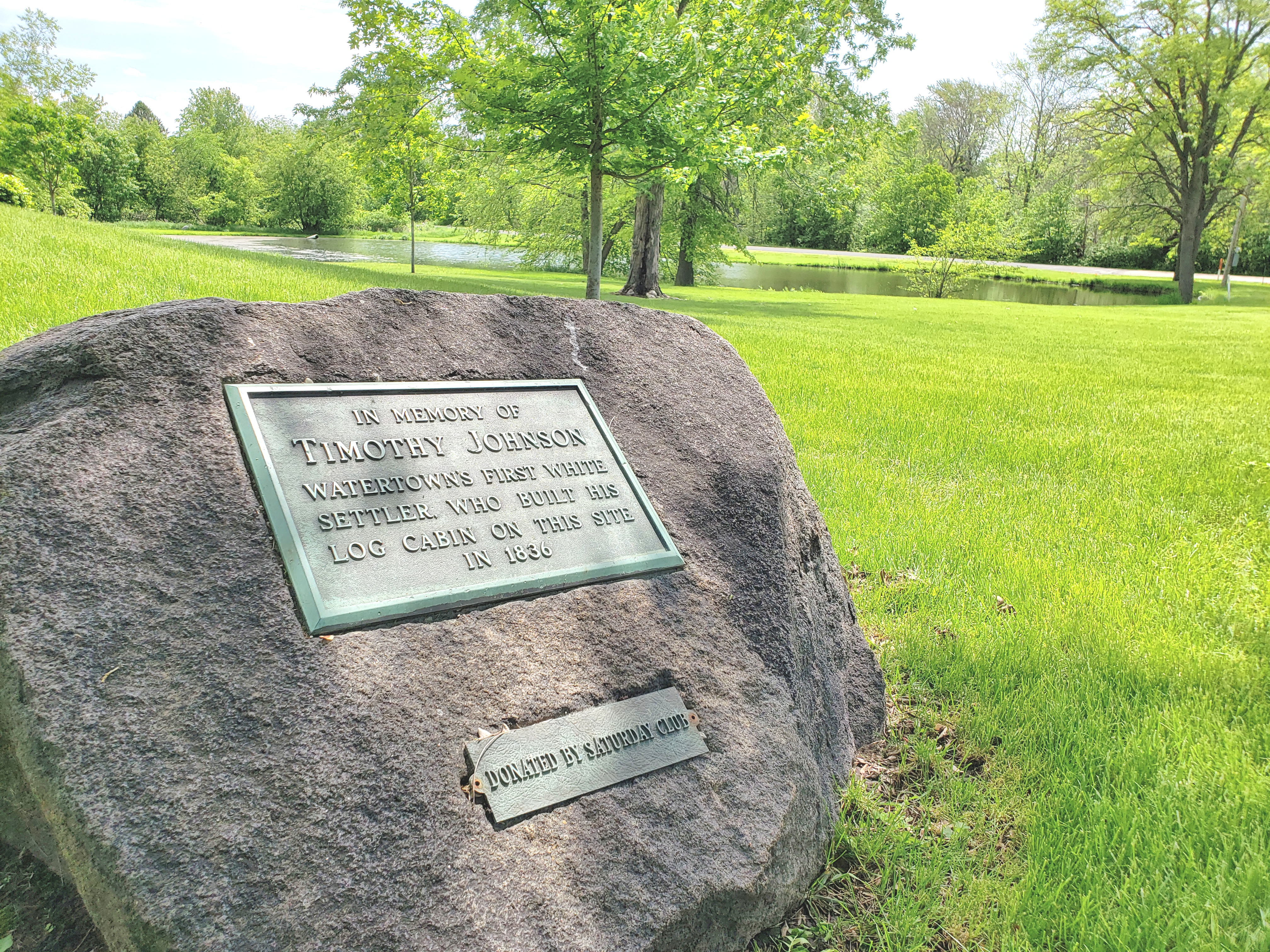
Our citizens know the
rest — they know how family has followed family—how roads have been opened in
all directions — how the towering woods have been cut down — how houses have
been put up — how days of scarcity have been followed by days of plenty — how
mills and manufactures have been erected along the length of our never failing
water course — how the promising germs of institutions of learning for the
education of the young have been planted — how temples of worship have arisen —
how the solitary cottage of the first lonely pioneer was quickly made happy and
cheerful by the log cabins of the new comers — how the narrow trail has been
succeeded by the iron way — how the scattered settlements clustered into a
hamlet — how the hamlet grew into a village — how the village enlarged into a
city — though that city, with all its railroads, telegraphs, gasworks, elegant
mansions, magnificent blocks, and many other characteristics of an advancing
seat of enterprise and wealth, is hardly yet in the middle of the onward
career.
And now having
witnessed all these wonderful revolutions, he bid adieu to the theatre of such
peaceful triumphs of industry and intelligence, and voluntarily goes where the
same incidents in the tragedy of life are to be enacted over once more before
the hero passes from the stage. With a
form slightly bent down with weight of years, a countenance bearing the traces
of care and labor, but with a spirit hopeful and firm as ever, with a light
step, the gallant old pioneer starts away to make another experiment at empire
building, hundreds of miles further towards the setting sun.
Prosperity crown his
efforts. May he long live and often
revisit us. We know he will never
receive any other than the most hearty and cordial welcome, whenever he makes
his appearance in our midst.
Founder's physique belied historical stature
A companion
article to Johnson's writings, originally published in the Watertown Democrat on Feb 9, 1870.
Perhaps it will not be out of
place, in this connection, if we attempt to give an outline of Mr. Johnson's
personal appearance, as we were accustomed to see him some years ago. He was
somewhat under the average size and weight, not very tall but slim, and without
looking either powerful or robust, he struck one as being tough, sinewy and
persistent - a man accustomed to activity,
exposure and outdoor life, and capable of enduring a great deal of
fatigue and privation. When we first saw
him, his once erect form slightly stooped, from the effects of toil and years.
His complexion was light, and in youth must have been florid and fair. His eyes
were deep blue, and age had silvered his hair.
On all subjects that came within the range of his observation, he was
well-informed, acute and practical in his conversation. Though something of a
reader, his book knowledge was probably not extensive, as perhaps neither his
tastes or pursuits led him in that direction. If, as we have been informed, in
early manhood, he had been a Methodist exhorter, he must have been warm and
fervent in his appeals. He was a good and accommodating neighbor but not
disposed to be on very familiar or intimate terms with many. He was retiring
and secluded in his habits, disposed to be reticent and keep his own counsel,
and rather choosing to be by himself - there being something in the grandeur
and stillness of the boundless forest, and in the solitude of the lonely
journey that harmonized with his thoughts and feelings. For a home, he seemed to prefer the distant
frontier, with its trials and dangers, to the crowded city, with its rivalries
and excitements.
These are the impressions we
received when we first met him, more than seventeen years ago. We remember we
had been here but a few days, when he called at our office, subscribed for the
Democrat, and casually stated that he had taken all the papers ever published
here. This led to a little talk, during which we ascertained that our visitor
was the first settler of the place.
We are not aware that more than
one likeness was ever taken of Mr. Johnson. That was obtained, at our
suggestion, about fourteen years since, through the kindness of Mr. Curtis
Cooley - who then had a Photograph Gallery, and the last time he was in his rooms,
shortly before his death, he brought the negative into our office and gave it
to us and it is still in our possession.
A fond farewell: The Obituary of Timothy Johnson
Death of the Pioneer of Watertown
The Watertown
Democrat, Feb 2, 1871
Mr. Timothy Johnson, the first
settler of Watertown, died at Madison, Wis., at 8 o'clock on Sunday morning,
the 29th of January, 1871, in the 79th year of his age.
He was born in Middletown, Conn.,
on the 28th of June, 1792. What his early educational advantages were we are
not informed, but we presume they were fair, though the common schools of those
days so soon after the close of the revolutionary war were by no means what
they now are. While still a lad, he moved with his parents to central New York,
then the land of promise for New Englanders. In 1816, he made a journey to the
south, wandering about a couple of years in Virginia, North and South Carolina
and Georgia. Not long after his return he married, purchased a farm near
Rochester, sold that and bought another in Orleans County, which he afterwards
exchanged for one in Montville, Medina County, Ohio, whither he removed in
1828. There he remained several years, when the roving desire again took
possession of him, he visited the Maumee region, but finding no location that
suited him, he extended his tour into Wisconsin, reaching the valley of the
Rock River. He was so well pleased with the new country that he resolved to
make it his home.
After various excursions
previously made - sometimes by himself alone and sometimes in company with
others - the 10th of December, 1836, found him, with his family, occupying the
only house then standing within the limits of our city, which he had previously
built with his own hands, the first permanent American settler ever located
here. It was then a wild, woodland, untenanted, neighborless place, with all
the hardships and deprivations of frontier life and none of the comforts of
civilization. The Indians were still lingering about their familiar haunts,
looking with distrust on those who were about to take their lands and drive
them away. Here he remained a number of years, until a prosperous and
flourishing community grew up around him, profiting little by the opportunities
he had of securing a competence, when in 1856, he again resumed his youthful
habit of exploring new territories, and in his old age, sought a home for
himself in the Northwest portion of the state - Polk county, we believe he selected.
The gathering infirmities of his
advanced period of life rendering him too feeble to endure the exposure and
toils of the lonely pioneer, he again returned to this city, to pass the rest
of his declining days in quietude and repose with his children, who watched
over him with all kindness and solicitude. But shadows and darkness began to
cloud his once clear and vigorous mind. His misty language and listless groping
exhibited unmistakable signs of mental depression and alienation. His malady
did not assume a violent form, but showed itself in strange ways that too
plainly indicated reason was losing its "proud empire" over his
thoughts and actions. For his more skillful treatment, he was taken to the
Asylum at Madison, where he lingered, without much suffering or pain, until
death came to gently draw aside the veil from his overcast and wandering
intellect, release his spirit from its bodily imprisonment, and disclose the
realities and splendors of the world beyond the grave there. "There is no night there."
Mr. Johnson was a man of close
observation, good intelligence, sound judgment, and remarkable, even among the
proverbially generous pioneer elm, for his unfailing and genial hospitality.
When his rude and solitary log cabin was the only habitation in all this
vicinity that could offer shelter to the traveler, the belated wayfarer or
stranger was sure of a hearty welcome to his roof, and readily entertained with
the best he could furnish. Some of our oldest citizens - among whom is Gen. L.
A. Cole - passed their first night, after reaching here, weary and fatigued, at
his fireside and partook of their first meal at his table. He was a kind,
accommodating neighbor and true friend.
Of Mr. Johnson's family four
daughters and three sons survive, viz: Mrs. Philander Baldwin of Iowa; Mrs. P.
V. Brown and Mrs. J. A. Chadwick, of this city; Mrs. Dwight Goodrich, now in
Pilatka, Florida, where she is spending the winter with her husband for the
benefit of his health, Henry Johnson of Dexterville, Wood county, Charles
Johnson of Milwaukee, and John B. Johnson of Portage, Wis.
Cross Reference: Portrait of Mrs. Sheldon Holmes,
granddaughter of Timothy Johnson. Obit for Mrs. Sheldon
Holmes (nee Nettie Chadwick
Holmes, Nettie nee Chadwick
(Sheldon)
The funeral took place on
Wednesday the 1st of February, at the residence of his son-in-law, Mr. John A.
Chadwick, attended by a large number of former neighbors, and a few of the
surviving companions of his pioneer days.
Death of the First Settler of
Watertown: Mr. Timothy Johnson.
The Watertown
Republican, Feb 1, 1871
Again the painful duties evolves
upon us of chronicling the death of another early settler of Watertown, this
time the first white man who settled where the city of Watertown now stands -
Mr. Timothy Johnson. Mr. Johnson died in
the Hospital for the Insane, at Madison on Sunday morning last, in the 79th
year of his age.
In the month of June 1836 Mr.
Johnson came up Rock River in a canoe, to the spot where Watertown now
stands. Finding the location favorable,
he built the first house here ever erected by a white man, near the site of the
present residence of Mr. A. W. Carlin, in the 3d ward. After a residence here of about 20 years,
during which time he lived to see the spot, where but a few short years before
the Indians reigned supreme growing into a large and flourishing town, he again
engaged in the life of a pioneer in the St. Croix region of this state. Here he remained nearly four years, but he
finally returned to this city, and for several years resided with his
daughters, Mrs. J. A. Chadwick and Mrs. T. V. Brown; until by reason of his
demented physical and mental condition, it was necessary to place him in the
Hospital for the Insane at Madison. His
mind remained impaired up to the time of his death, but his health was
generally good, and he appeared to enjoy life under the kind treatment he met
with. He received a paralytic stroke
which was the immediate cause of his death.
Mr. Johnson was born in
Middletown, Conn., June 28th, 1792. He
early emigrated to Rochester, N.Y., where he married. From Rochester he moved to Medina, Ohio, from
whence he came west. Mr. Johnson was
possessed of all the strong and marked characteristics of the pioneer. Fearless, independent and honest, he
outwardly, perhaps, to some, did not always show the warm, tender heart that
beat within him. Before his late
affliction Mr. Johnson was possessed of more than ordinary mind, much given to
research, and he was able to express his ideas very aptly in his own peculiar
way.
The old pioneer goes down to his
grave full of years, and the places which knew him will know him no more, but
the memory of the first settler of Watertown will ever remain green in the
minds of our people.
The Founding
of Watertown
as seen
through the eyes of
Timothy
Johnson’s daughter
by
W. F. Jannke III
When I stated a desire to write
about Timothy Johnson, the founder of our fair city, I was faced with a
dilemma: what can I say that hasn’t already been said or that I could say in
one article instead of a mini-series? I puzzled and puzzed until I came across
a copy if a speech which had been written by Jane (Johnson) Chadwick, one of
Johnson’s daughters. Her speech was presented before an old settlers meeting in
the late 1880s and a version of it had been published in the Watertown Gazette.
But I had a copy of her original notes, which contain charming colloquialisms
(as well as a very personalized form of spelling!). This manuscript, the
original of which is in the collections of the Watertown Historical Society, I
felt presented a very unique perspective on the founding of our city, through
the eyes of a young girl.
Jane Melissa Johnson was the
fourth known child born to Timothy and Lucretia (Brownell) Johnson. She was born August 14, 1827 in Rochester,
NY. She married John Chadwick, another pioneer settler, in 1842 and they had at
least four children. She died in Watertown on April 14, 1898 and together with
her husband they are buried in Oak Hill Cemetery, not far from the grave
site of her parents.
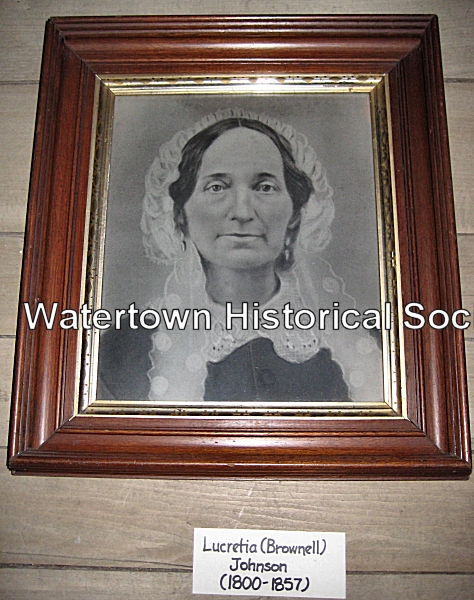 Lucretia (Brownwell) Johnson
Here, in her own words, is Jane
Chadwick’s story:
I will date this little
manuscript September 20, the day we started from Medina, Ohio, for our western
home, then called the Northwest Territory, later allied Wisconsin Territory.
Then there was no settlement to speak of this side of Green Bay. There was a
fort at Portage where a few soldiers were stationed. The settlements were few
and far apart as I said. We started September 20, came to Cleveland and there
took a schooner for Milwaukee. At that time there were no steamers running
farther than Detroit. We lay six days in Cuyhaguy River windbound, then another
week on the St. Clair flats, then a day or two in Mackinac and when we landed
in Milwaukee we had been on the boat three weeks, it being then the first of
October.
Milwaukee was a small village
then, [having] only two hotels, one called the Bellaview, the other [the]
Cottage Inn. The east side of the river was Juneau’s side and the west side was
called Kilbourn Town. On the east side Mr. Juneau had a trading post for the
Indians. The Indians had unbounded love and reverence for him. They called him
Solimo Nichisin Solimo, [which means] good in our language. We stayed in
Milwaukee five days. My father [met] us there, he having come here in early
spring. He did not dare to leave his claim for fear of someone jumping [it],
for the land was not then in market and if they should only be gone for a short
time perhaps when they returned they would find another occupant as much at
home as you were when you left, so you see it was quite necessary for one to
stay and keep close watch over what he had. In those days might was right;
[there was] no law to speak of and it stood one in hand to guard well his own.
I think perhaps that is in a measure the same now.
We started from Milwaukee [and]
went as far as Prairieville, now Waukesha. There we again stopped for four
weeks. There not being any road cut through, my father thought he would dig out
some canoes and come down the Oconomowoc stream. So he made four. He fastened
two together making quite a craft. We loaded what few household goods we
possessed and again started for our new home we had heard so much about, the
land of promise to us. But our boats were green and heavy and the stream too
small, so the consequence was the men had to wade a good part of the way and
push the craft. Our intention was to come down the Oconomowoc, then down Rock
River to our home, then nameless but now our long loved Watertown.
Well, it was now in November. The
weather was getting cold and we had managed to get as far as the first lake and
the ice had frozen so hard they had to break it with poles. But by hugging the
shore we managed to get through the first lake, now called Fowler and Labelle.
We again pitched our tent and in the morning the lake was frozen over so hard
the Indians could walk across. Well here we were, frozen in. The next thing to
do was to stay where we were until my father could come here and get his team, consisting
of a yoke of oxen and wagon, which took one week, we camping there all this
time. I forgot to mention there were three men with us, helping us: Messers.
Miller, Griswold and Baldwin. Mr. Griswold stayed with us whilst my father, my
oldest brother, then only 14 years old, and the other two men came for the
team. My father had cut some hay and they had to take some to feed the oxen.
It got a little warmer and we
again took up our line of march, cutting the road through the Rock River woods,
which was thick heavy timber, and many times not getting but a very short
distance, not being worthwhile to move our camp. There not being a house
between here and Waukesha , we got along so slowly we all got very tired, so my
oldest brother, Henry, my two older sisters Mrs. Baldwin and Mrs. Brown, and
myself, then only nine, started afoot from Pipersville and followed an Indian
trail until we reached here.
There was one little log shanty
here. It stood about where the new Opera House is [Editor’s Note: Today the Elk’s Club ]. We found a French man in it.
He was very glad to see us. All he had to eat was some salt pork and we brought
a loaf of bread, of course [it was] not very good such as we could make on our
way as we journeyed along. But such as it was I never had a meal taste better
than that fried pork and bread did. That cold night of long ago was my first
night in Watertown. Two days later the rest of the family came, which was the
12 of December, 1836. [Editor’s
Note: Mrs. Chadwick is in error. The Johnson family, according to all other
sources, including that of her father in 1851, arrived in Watertown on December
10, 1836, not December 12th.] The snow had fallen to
the depth of two feet and it was very cold. Thus bedded our long and tedious
journey of about three months. People complain now of slow trains, but when you
can start from here at seven in the morning and get to Minneapolis at 3:30, a distance
of three hundred miles, I think it quite an improvement on ‘36 times.
When we left Waukesha we bought
vegetables for the winter. But before we reached here they were all frozen. Our
journey here was such a long and expensive one. What we thought would do for
our winter supplies was nearly gone, so after my father had got a little rested
he had to start again for Milwaukee for more supplies for the winter. He bought
one barrel of pork for which he paid $40.00 and two barrels of flour for which
he paid $20.00 a piece. Butter was 50 cents a pound, too much a delicacy to
indulge in very much, and other things in proportion.
When my father reached home our
little shanty was too small to hold all, so we put one barrel of flour outside and
covered it as well as we could. But before morning the Indians had stolen it
and father followed them for two days but could not catch them. They had two
ponies and put poles across from one to the other and laid the barrel on the
poles. That was quite a loss for it took so much time to go for it, as well as
paying for it.
We had the body of a hewn log
house up but it had no roof nor floor and that had to be made by hand, cut and
split out of logs and hewn and the shingles made the same. But it was finished
and I think we moved in January. It was very comfortable. Then we had to think
about how we were to get our seed for our spring sowing. So after we had got
settled in our new house, father cut and hewed timber for building purposes and
rafted it down the river, I think, to Janesville, where he sold it and bought
potatoes for which he paid five dollars per bushel and beans the same. That of
course did not mean many to eat, we had none all winter. But as soon as they
could grow we had a plenty, for the soil was very rich and yielded abundantly.
I never saw such lovely gardens as we used to have.
When we came here our nearest
neighbor was Mr. Dwight Foster, living at Fort Atkinson. They moved there the
same fall we came here. We did not quarrel but lived as all good neighbors
should, in peace and harmony with each other. [It was] not very neighborly for
we were twenty-five miles apart.
When my father came here he
claimed where the most of our city is on the east side of the river. He sold to
Mr. George J. Goodhue his interest in the water power and [in] the summer of
1837 he built a dam across the river and a sawmill. It seemed very nice to have
lumber without making it by hand. The first year after the dam was built the
fish came up here in such swarms they seemed to fill the river full. We had
them in every form, fried, boiled, baked, and roasted. Also smoked and salted.
In fact we had fish enough.
Our little town was first called
Johnson’s Rapids after its founder but later was named Watertown. Judge Hyer
had the honor of naming our city. Some of the oldest settlers will remember
him. He, with Thomas Brayton, settled in Aztalan.
There were two or three brothers of the Braytons, one they called Honey
Brayton. This was a little anecdote they used to relate about him. He used to
be fond [of] making a little money out of people as they were traveling through
the country. So one night a wayfarer happened to stay with him all night. In
the morning he charged him 75 cents, 25 cents a meal. He said he slept on a
turnpost bedstead and had honey on the table. Thus he derived his name; them
days we never thought of charging anyone for a night’s lodging or meal. We were
only too glad to see them, that was recompense enough. We did not have so much
to offer, but it was freely given.
The first religious meeting here
was at my father’s house, the Rev. Mr. Halstead officiating. He was a Methodist
circuit preacher. He came about noon, weary and almost sick. My mother got him
some dinner and he went to bed to refresh himself so he could preach in the
evening. We children (there being seven of us) were sent in different
directions to notify the people that there would be preaching at our house that
evening. I think there were about 12 or 15 present. But the poor man was so
tired and sick he had to sit in his chair to preach. That was the fall of 1837.
After that we had meetings about once a month. A Mr. Pillsbury was on the
circuit with him.
The first school here was taught
by Miss Dolly Piper. She taught two summers. She was a
lovely lady [and] a daughter of Mr. Benjamin Piper of Pipersville. The first
male teacher was my husband, Mr. J. A. Chadwick. The first postmaster was Mr.
Patrick Rogan. [ Editor’s
Note: The first postmaster
in Watertown was William M. Dennis, not Patrick Rogan. ]. The first store here was kept
by Mr. Luther and John Cole. It seemed so nice to have a place where we could
do our trading without going to Milwaukee. One time, in company with three or
four of my friends, Mr. John Cole said the one that got married first should
have a stone jar that stood there filled with snuff. Well, I was most always up
to snuff so I got the jar. And a good husband too.
Mr. Linus R. Cady kept the first
hardware store here; Mr. Stephen March had the first furniture store here; Mr.
William R. Perry had the first cooper shop; the first lawyer here was Mr. John
Richards. He came here in a very early day, I think in ‘37. The first death
here was a Mr. Bass. He came here with two others [and] was hired to come here
and jump people’s claims. They got to drinking and quarreling and killed Bass.
They came in the night to have my father go to their shanty, but he refused to
go, saying if he was dead he could do nothing for him. But in the morning he,
with another man, went to where they were and found him laying by the fire, his
flesh nearly burned off one side. They had to send to Milwaukee for a coroner
to hold an inquest and my father, with one or two others, made the burial case
made of planks split and hewn from logs. Not very beautiful but I presume quite
substantial. In grading the streets a few years ago [in 1859] he was found and
laid to rest in the cemetery. That was our first death and burial.
The few first years of our living
here were attended with many trials and privations [and] also some pleasures.
We used to look forward to our holiday festivities with a great deal of
pleasure. Sometimes we would go to Jefferson and sometimes their people would
come here to attend our parties. But as the country became more settled we knew
less of our more distant friends and, in fact, hardly knew them at all. I hope
our meeting here may renew our old friendship and form new ones. I feel that it
was not us that had to bear the burden but our fathers and mothers who had it
to bear, who had to care for us before we could care for ourselves. But they
have nearly all gone to another home.
The home where sorrows never come.
If we are prepared for that journey, let’s go hand in hand to our Old
Settler’s meeting there. Please excuse
my many shortcomings.
Mrs. J. A. Chadwick
1864
04 14 LECTURE
Next Sunday afternoon, at 2
o’clock, Mr. Timothy Johnson will deliver a lecture at the Liberal Church. Mr. Johnson is the pioneer settler of
Watertown, well known to all citizens, and will no doubt deliver an interesting
and instructive address on the comprehensive topic he has chosen.
1865
07 20 AT FOURTH OF JULY IN WATERTOWN
. . . It would hardly be excusable for me to conclude this
communication without mentioning the fact that I made the acquaintance of Mr. Timothy
Johnson, the first settler of Watertown.
The old gentleman still looks hale and hearty. Long may he continue so. He has lived to see the spot which he knew as
a wilderness grow into a flourishing city of several thousand inhabitants. I hope he may live long to enjoy its
comforts.
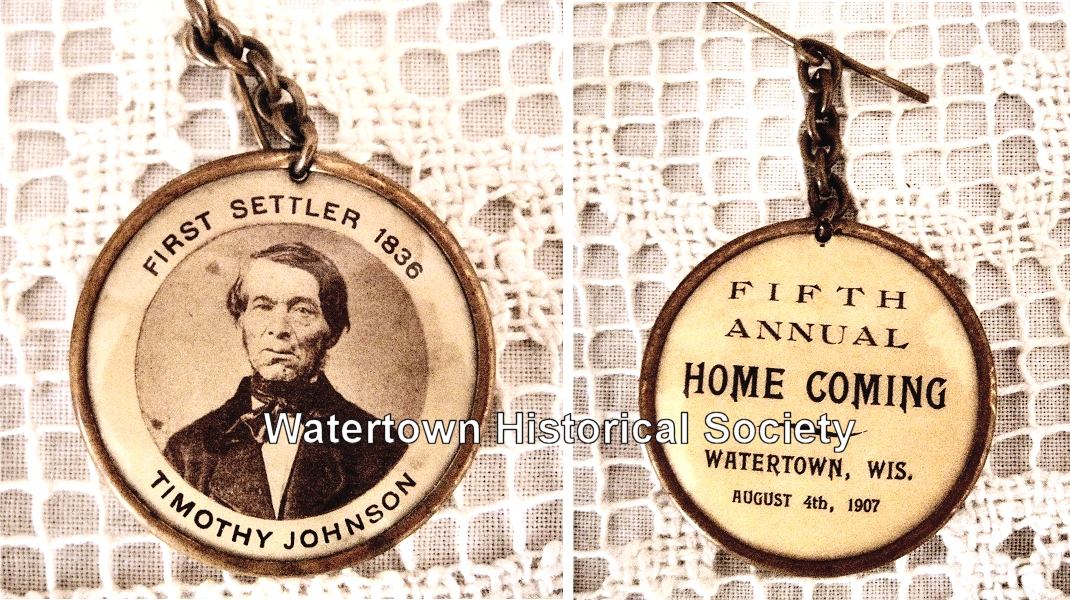
-- -- WATCH FOB FOR 5th ANNUAL
HOMECOMING
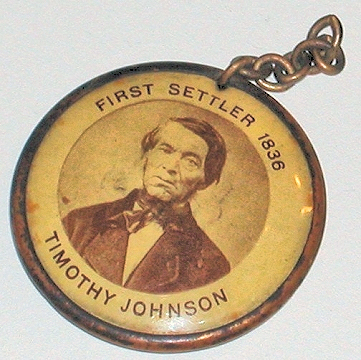
1907 Homecoming Day, Recognition of, Watch Fob
06 30 OAK HILL BURIAL SITE
Watertown, rich in history, has been somewhat behind other towns
in perpetuating the names and places of historical significance. Other towns, or to be more exact,
organizations in other towns, have taken it upon themselves to keep alive
memories of the past by certain physical signs.
In Oak Hill cemetery Timothy Johnson, the first white man to make
his home in Watertown, is buried, unknown and almost forgotten, with no
indication that this rugged pioneer who successfully combatted the dangers,
hardships and ordeals of nearly 100 years ago in this now attractive city, was
the first white settled in “Johnson’s Rapids.”
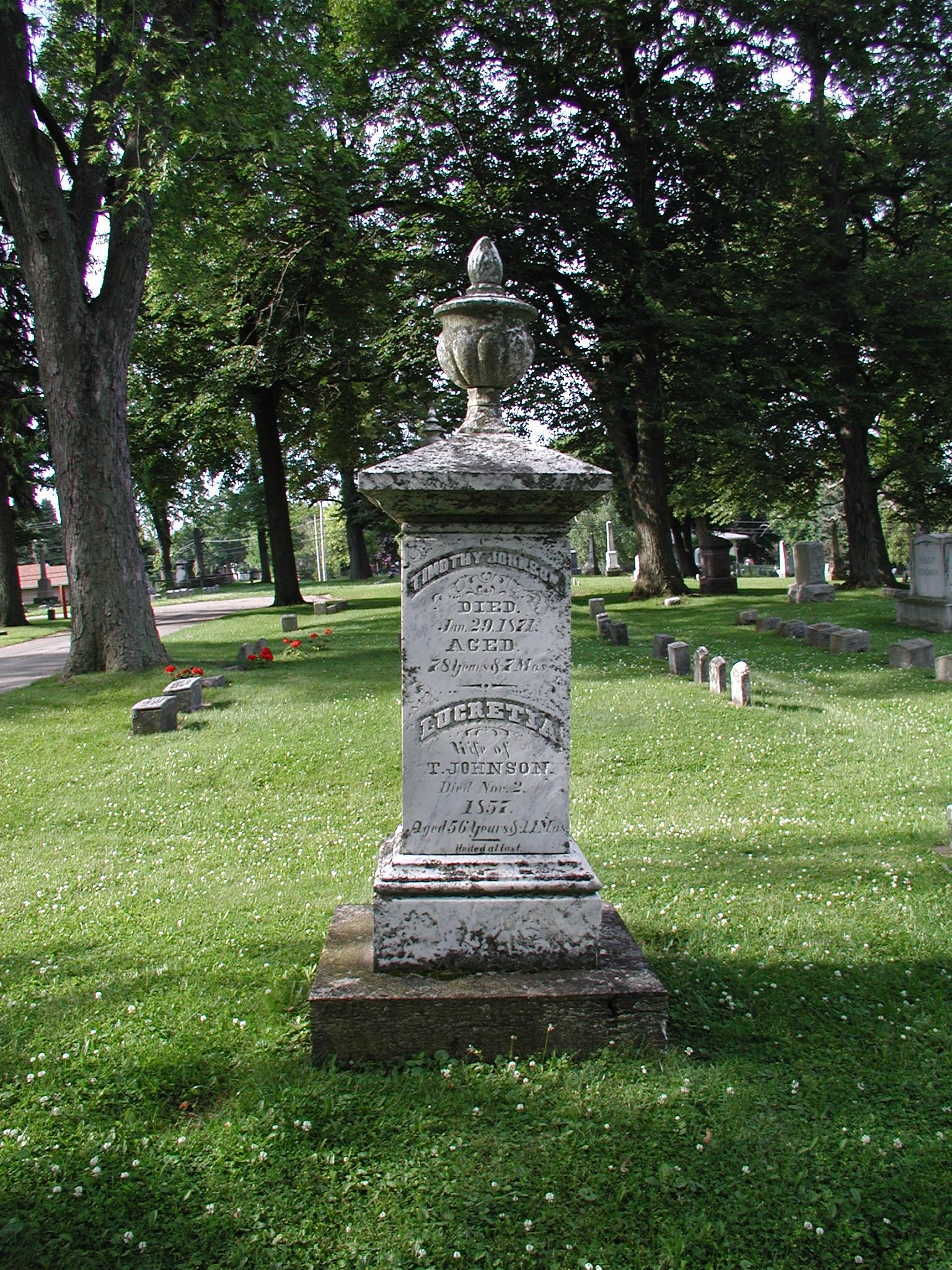
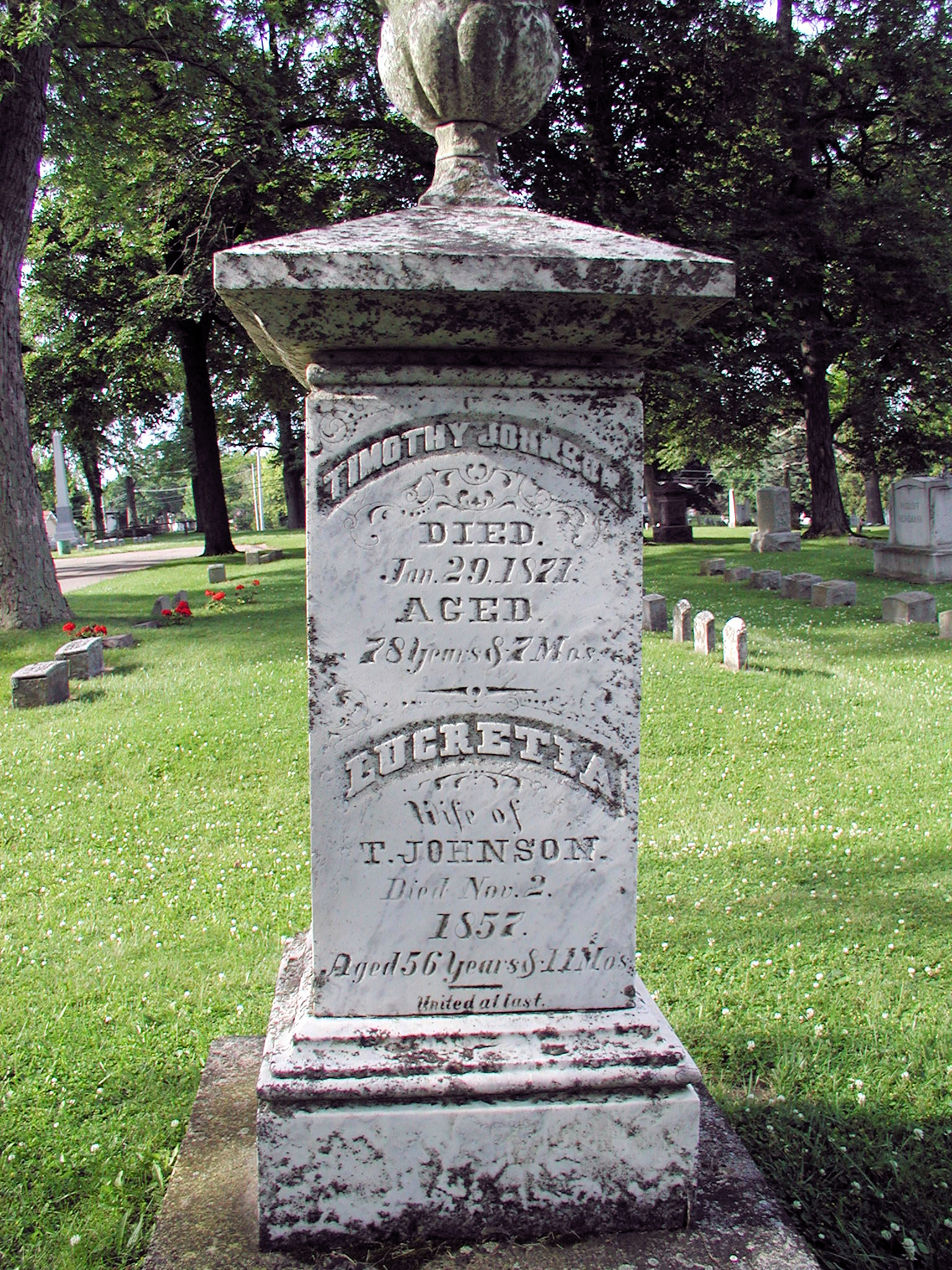
Marking this grave would be another worthy project and an
inexpensive one, too, for the much talked about historical society.
11 12 JOHNSON GRANDDAUGHTER (____-1932
Granddaughter of First Watertown Settler
Is Dead.
Mrs. Emma Fuller, 83,
granddaughter of Timothy Johnson, first white settler in Watertown, died
Saturday night, 11/12/32 at the home of her nephew, Edward Brown, Town of
Shields, where she had made her home for the past 2 years.
She had been in failing health for
some time and her death was due to the infirmities of old age. With the exception of a few years, Mrs.
Fuller spent her entire life in Watertown.
She was born here, being a
daughter of the late P. V. Brown, for many years a banker here and at one time
cashier of the Watertown National Bank.
Her husband, John Fuller, preceded her in death. There are no children surviving. Two sisters, Mrs. H. F. Heidenbran of Bay
City, Michigan and Mrs. A. C. Judd of Chicago together with 3 brothers: H. P.
Brown, Duluth, Minnesota; C. D. Brown of Spokane, Washington, and L. V. Brown,
Los Angeles, California, survive.
Mrs. Fuller was a member of St.
Paul's Episcopal Church. She was well
known among the older people of the community, her family having long been
prominent in community life in this section.
The funeral will be held Tuesday afternoon from the Nowack Funeral Home
with burial in the family lot in Oak Hill.
WDTimes,
11/14/32
CITED IN CENTENNIAL PARADE
07 04 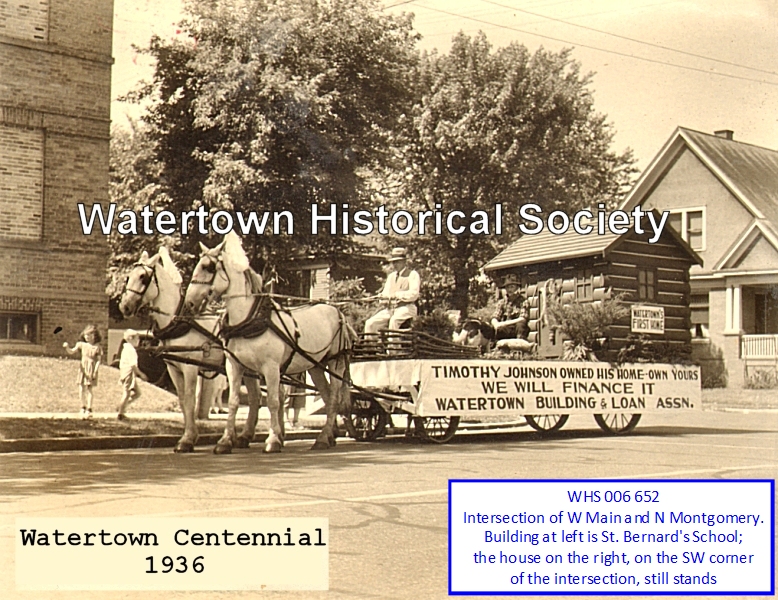
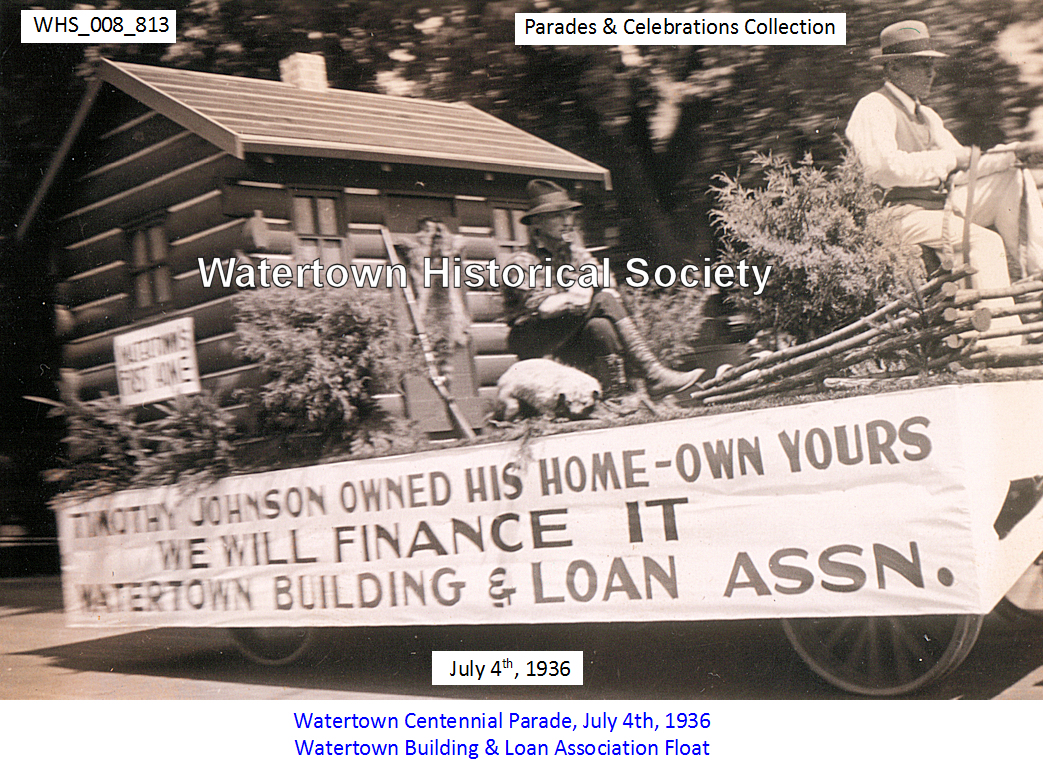
Grandson C. S. Johnson returns
for celebration. Mr. Johnson was among
the descendants of Timothy Johnson who attended the observance of the Watertown
Centennial in 1936.
1948
01 09 BETHESDA
TO CARE FOR HISTORICAL MARKER
The Bethesda Lutheran
Home on whose property the city marker designating the site of the first cabin
to be erected by a settler in Watertown is located, will be paid $25.00 per
year to maintain the plot around the marker which up to a short time ago was virtually
hidden in weeds and was sadly neglected.
The city
council recently reached an agreement with the institution to have it maintain
the site, after the city street department grades it properly.
1954
06 18 TIMOTHY JOHNSON GRANDSON HERE FOR
CITY'S CENTENNIAL
A
grandson of Watertown's first white settler and founder of Watertown, Timothy
Johnson, will come here for the city's centennial
celebration. He is Edward L. Johnson
of Pewaukee, where he operates a drug store with Edward Panter, former
Watertown druggist. Mr. Panter at one
time managed the Ford-Hopkins drug store.
The
two were in Watertown yesterday calling on a few old friends and while here
dropped into the Times building. Mr. Johnson said that they had read about the
coming centennial festivities and decided that while they were in the vicinity
they'd better come here to give the city a quick once-over again and then announced
they'd be back for the celebration, notably for the parade on June 27.
Mr.
Johnson was not born in Watertown, even though his grandfather first came here
in 1836 to settle what is now the city of Watertown. The grandson was born in Pittsville,
Wis. His parents were Mr. and Mrs. Henry
Johnson.
1963
EUNICE GRUNER PAINTING
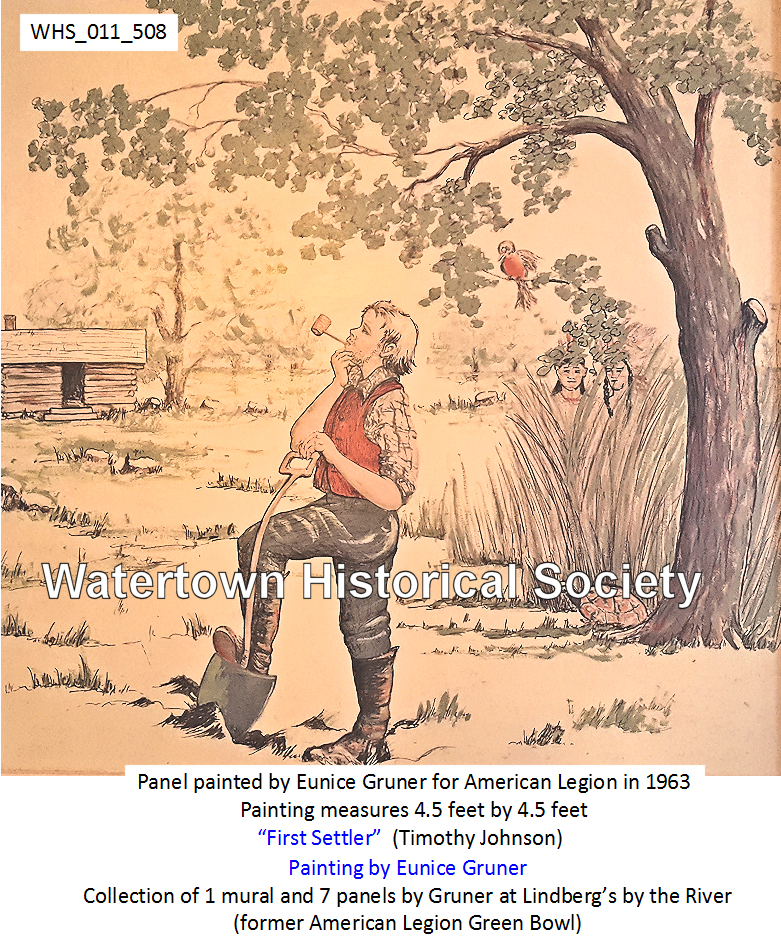 Mural at Lindberg’s by the River
1968
05 15 TIMOTHY JOHNSON PARK
Watertown's
newest park, the Timothy Johnson Park designated for the fourteenth ward, a
movement which began in the common council some time ago, is being placed under
the jurisdiction of the Watertown Park and Recreation Commission. Timothy Johnson was Watertown's first white
settler, coming here in 1836. One
hundred years later the city celebrated the centennial of his arrival with a
parade and several days of festivities, among the foremost observances in the
city's history. Some years ago the
Watertown Historical Society erected a marker to Mr. Johnson on the shores of
Rock River near the Bethesda Lutheran Home which was the site of his cabin.
1970
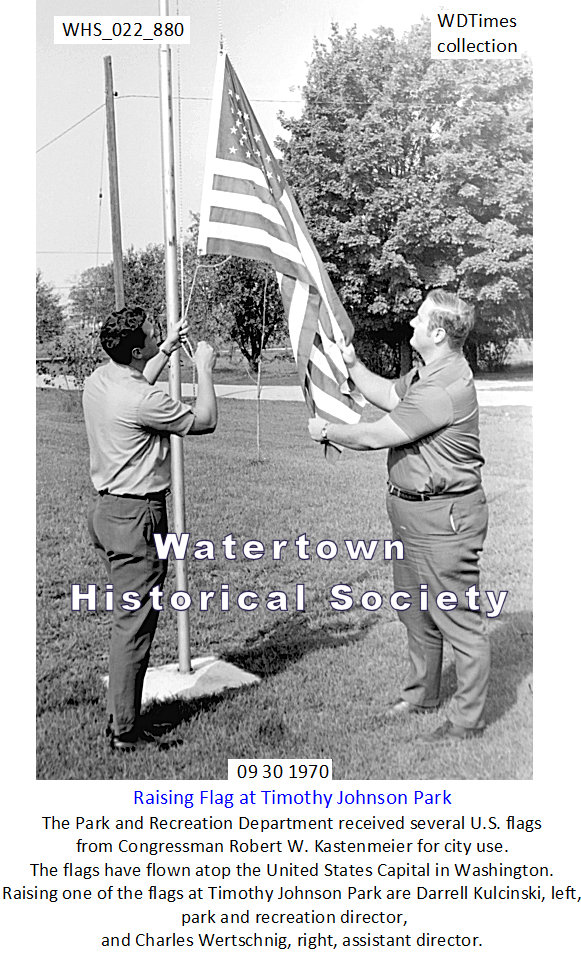
09 30 Flag flown at
park
The Obituary of Charles Johnson
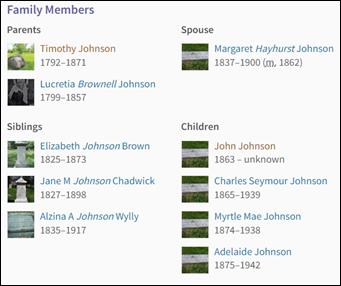
11/20/1924
<> Charles Johnson Will Be Buried Here Saturday.
Charles
Johnson, son of Timothy Johnson, who was the first white settler in
Watertown, died at his home in Milwaukee, 505 1/2 35th Street Wednesday
afternoon, 11/19/24. He was 86 years of
age, having been the first white child born in Watertown.
The
date of his birth was 8/25/1838. He
resided here until 1865 when he went to Milwaukee. He was an engineer for the Chicago, Milwaukee
& St. Paul Railroad for many years, running the engine until he was 80
years of age.
Mr.
Johnson was married to Margaret Robinson of this city in 1862. She preceded him in death 24 years ago.
Johnson
is survived by two daughters and two sons.
They are Miss Myrtle Johnson, Miss Adelaide Johnson, C. S. Johnson of
Milwaukee and Frank Johnson of West Allis.
Two
grandsons, sons of Frank Johnson, also survive.
They are Russell and Harold.
There is also one brother, John Johnson who resides in Minneapolis,
Minnesota.
He
was a member of the Veteran's Association of Employees of the Milwaukee Road
and of Excelsior Lodge No. 20, I.0.0.F., Milwaukee.
The
body will be brought to Watertown at 1:45 o'clock Saturday afternoon and
services will be conducted at Oak Hill Cemetery under the auspices of the
Excelsior Lodge No. 20, 1.0.0.F. of Milwaukee at 2:30 o'clock.
C.
S. Johnson of Milwaukee was in the city today making arrangements for the
funeral of his father, Charles Johnson.
1908 Charles Johnson return visit to Watertown,
son of Timothy.
References:
[ 1 ] First deed to a land grant was in 1836 and
went to James Rogan. Timothy Johnson,
made his first land claims at Aztalan, then in Jefferson and subsequently 1,000
acres in Watertown, but apparently this was recorded after Rogan's. Both came here in 1836.
Minnie Krueger,
recollection of her mother having worked before her marriage for Timothy
Johnson.
 Mrs. Sheldon Holmes, granddaughter of
Timothy Johnson
Mrs. Sheldon Holmes, granddaughter of
Timothy Johnson
JOHNSON STREET. Named after Timothy; is
near marker on what used to be grounds of Bethesda.
TIMOTHY JOHNSON’S OWN STORY (story written for Watertown High School 1936
Orbit)
I was born in Middletown,
Connecticut, on June 28 in the year of Our Lord 1792. I left home when at the age of 17. I
travelled through the different portions of the United States. After various excursions I came to a
beautiful sight of fertile black loam and best of all a clean river. I built a temporary cabin there, and using
this point as my home, I directed my travels from it. Once while walking over some nice land I felt
as though a million eyes were watching my every movement. My suspicions were all too soon
confirmed. Before I had time to collect
my thoughts, I was confronted by an ugly half naked savage. He was of an excellent build, though, and I
was afraid of my life. He just grunted a
little while a few members of his murderous band robbed me of my provisions and
the only bad effect I received was a few pangs of hunger from having to go
without food for forty-eight hours.
It was at this time that I
stopped at a spot which I discovered to be a very pretty little rapids. I finally went back to my shack but couldn’t
rest for I was continually thinking of that rustic dell. Soon after this
excursion I went back to the rapids and staked a claim for about one hundred
acres. The principal part of Watertown
is now built upon this ground.
In June I decided that a yoke of
oxen and wagons were necessary. The only
place to purchase these were Milwaukee, and so I made the necessary provisions
for the many mile journey. Upon arriving
in Milwaukee I looked up some former acquaintances. After much discussion I persuaded them to
come back with me. This they did, a
little reluctantly perhaps. They were my
old comrades Phil Baldwin, Reeve Griswold, and Charles Seaton. We very industriously began to clear the land
of its debris, and after many days of hard labor had a road made from my shanty
up to the east side of the rapids. After
this we went together and built a log cabin.
I find that the railroad junction is now situated at this place. My friends became envious of me, like all
humanity, and each staked out a claim for one thousand acres surrounding my
territory.
I liked my new home very much and
wanted to enjoy its pleasures and hardships with my beloved family. They were exceedingly eager to come, and
after much difficulty in computing and figuring time we came to the conclusion
that we should meet in Milwaukee.
I left the rapids on horseback at
a fixed time and followed an old Indian trail through Ixonia, Oconomowoc and
Prairieville (now Waukesha) to Milwaukee.
It was a trip that remained in my memory during the remainder of my
life.
I met my family and another
friend, Rich Miller, who was going to join our settlement. At this time we were compelled to dig out
three poplar canoes and construct a raft that would bear the weight of one ton. Our homeward journey was a difficult
one. It took us five days to reach
Oconomowoc. From there we were forced to
travel the remaining twelve miles by horse and wagon.
Thus it was, my friends, that the
little settlement of Johnsons Rapids was founded.

History of Watertown,
Wisconsin