website watertownhistory.org
ebook History of Watertown, Wisconsin
East Main Street Bridge
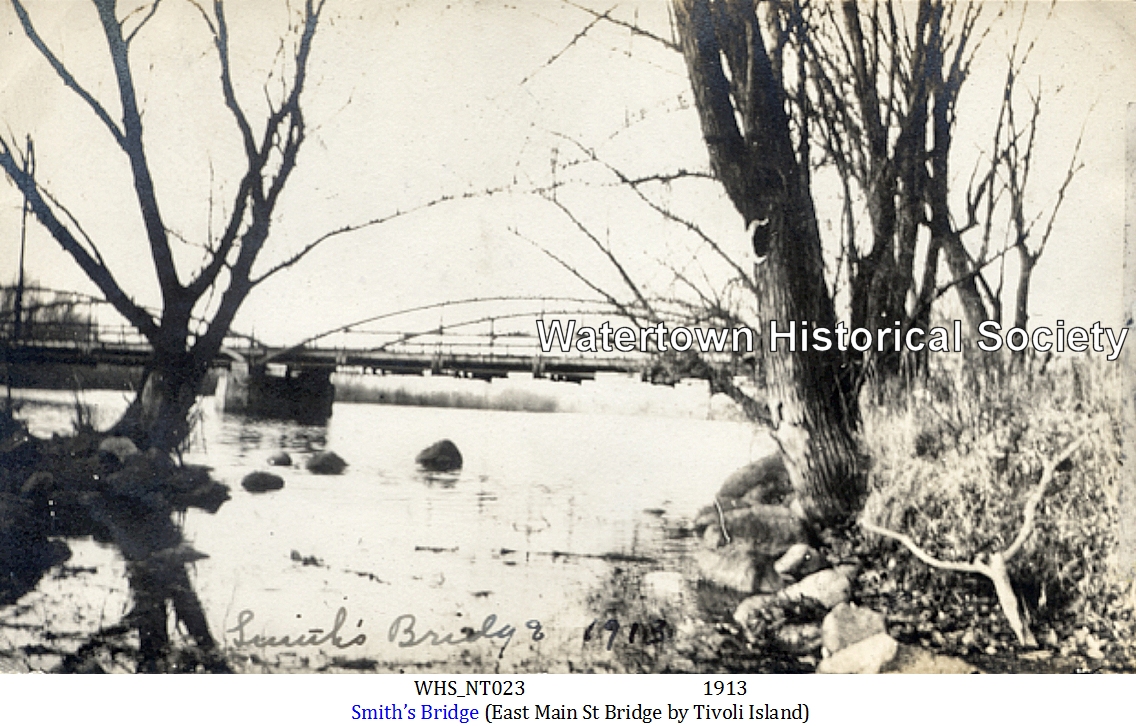
same as Smith and Memorial and later Hwy 19
bridge
Watertown’s New Bridge Dedicated
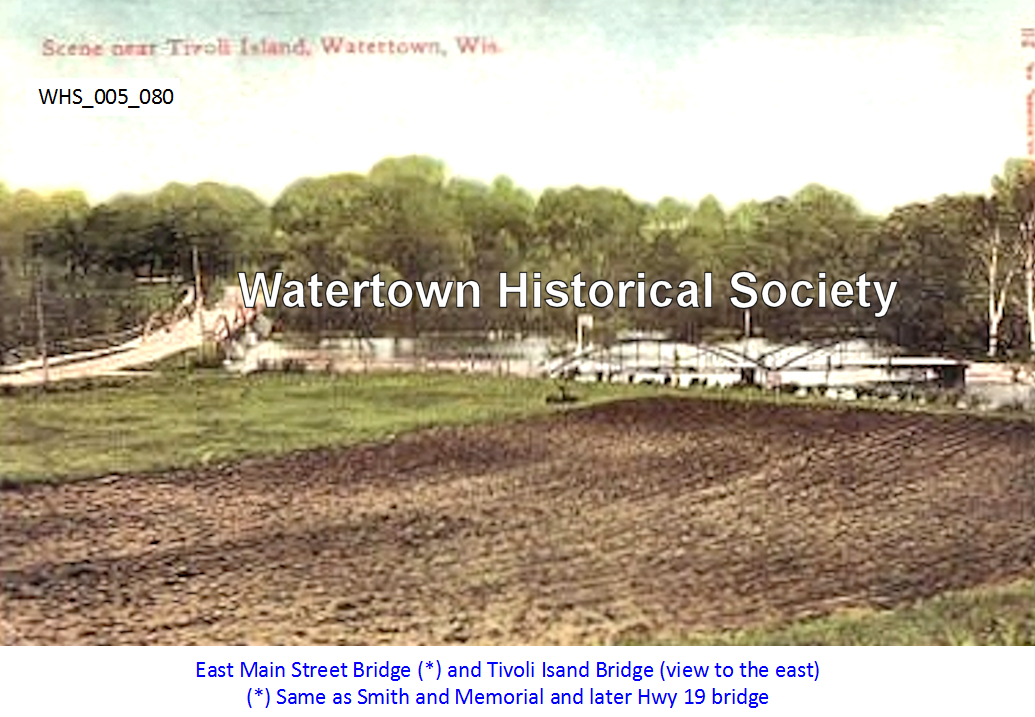
c.1890
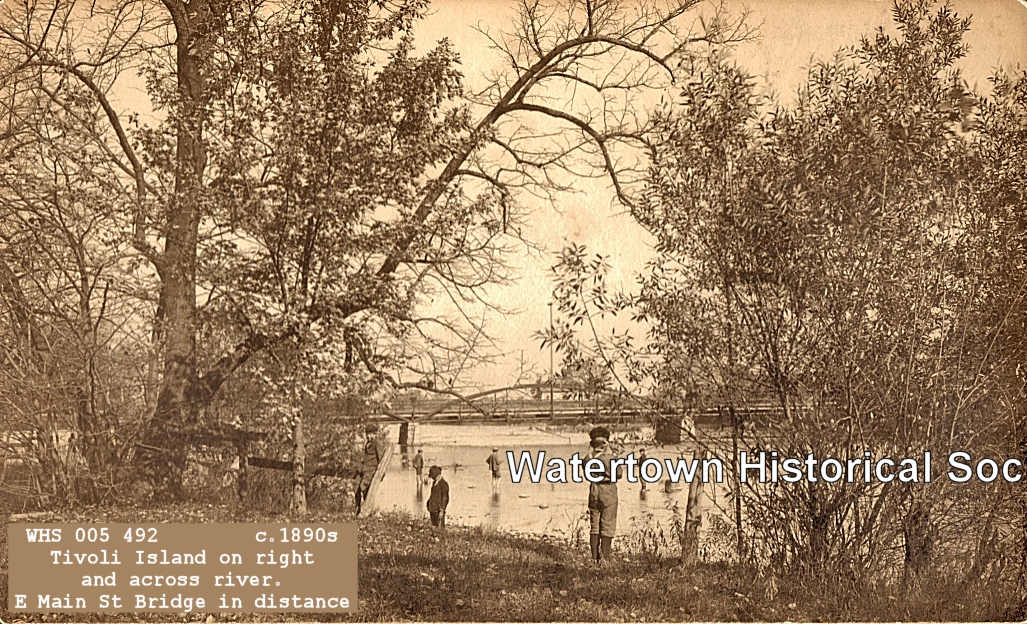
c.1899
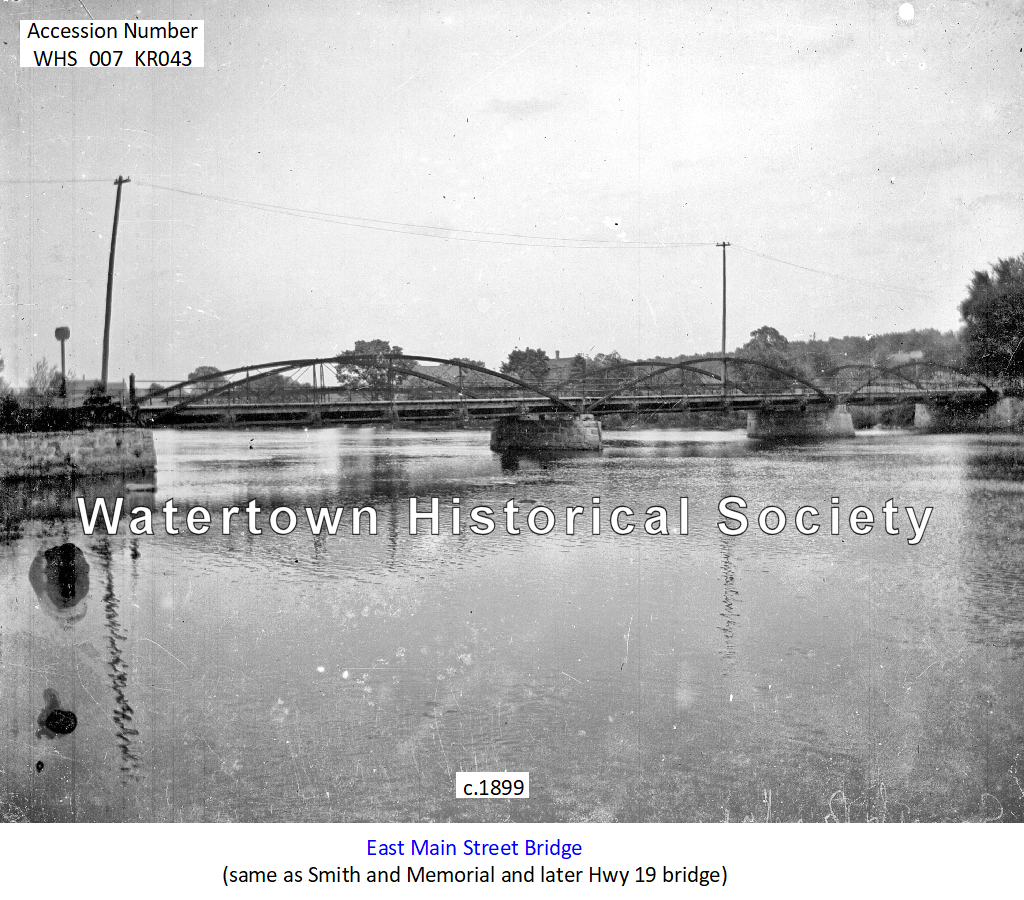
c.1900
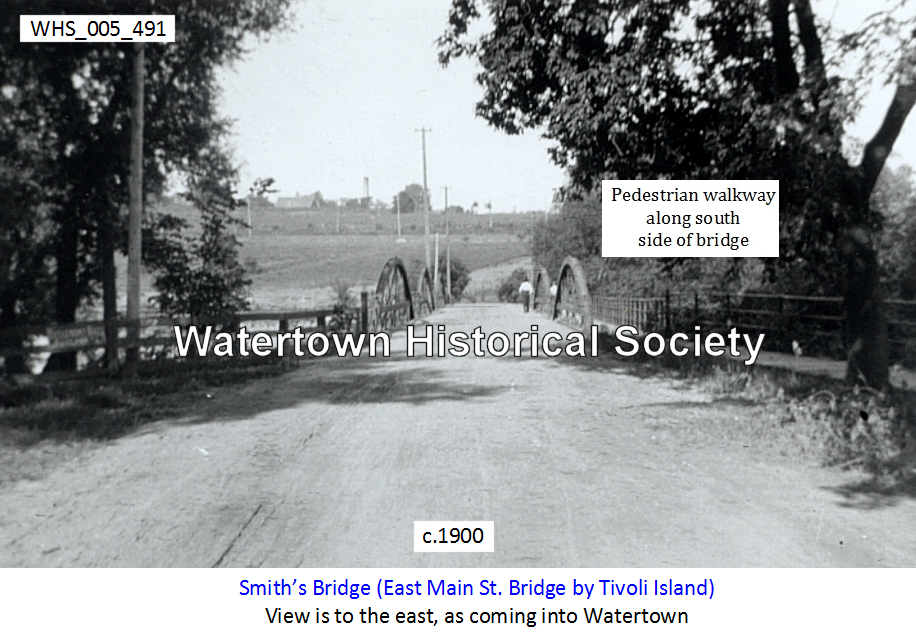
1913
LOOKING
NORTH FROM TIVOLI ISLAND
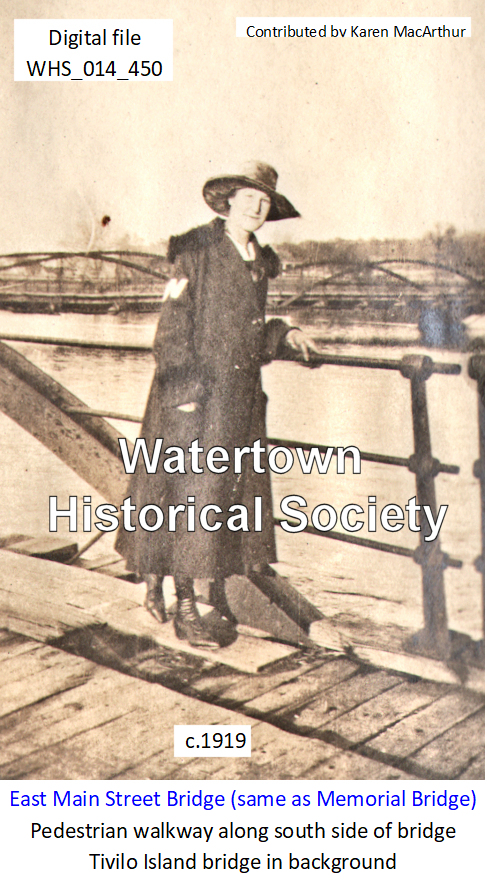
c.1919
1923
NEW MEMORIAL BRIDGE DEDICATED
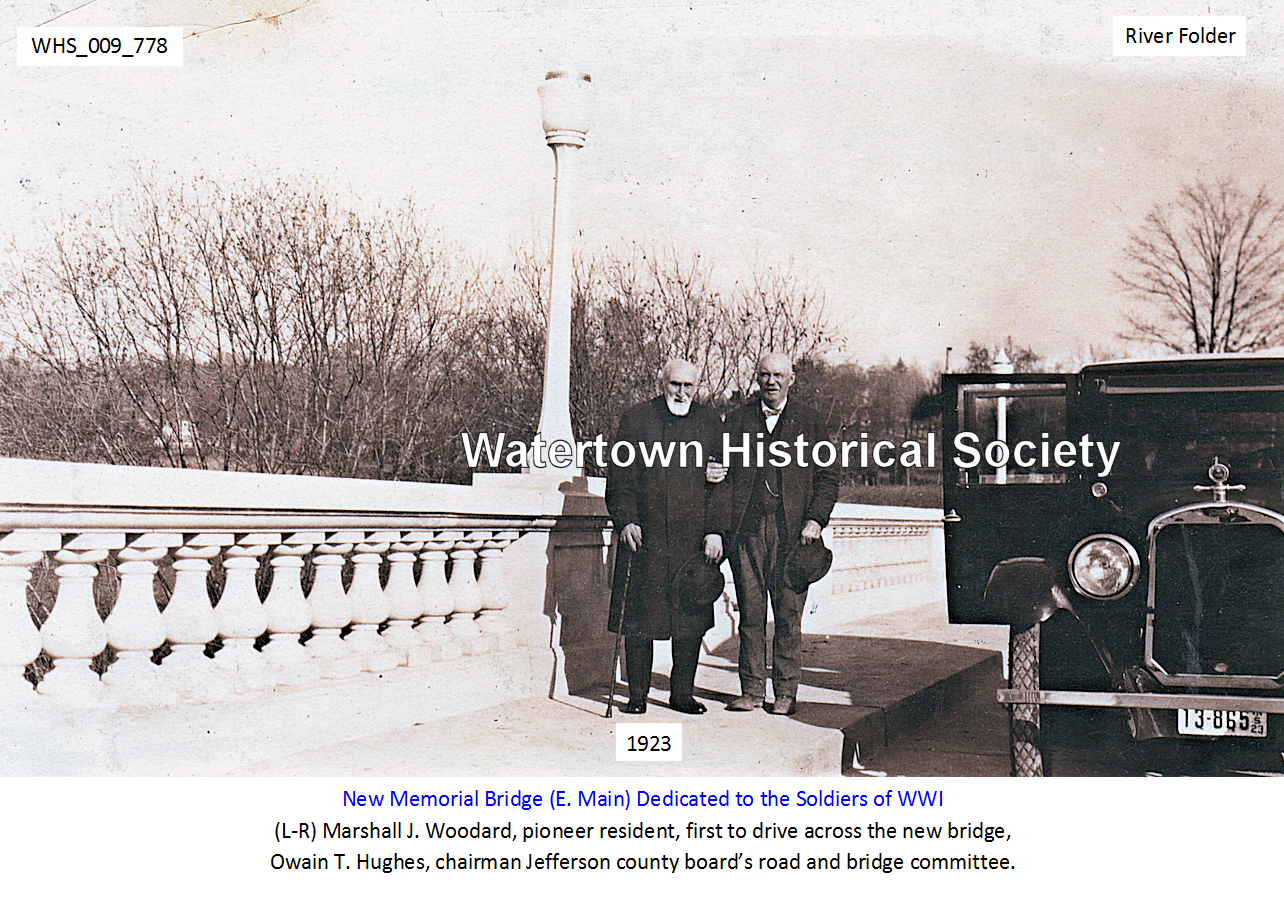
Pioneer, 93 First to Cross Span on Site of Old Rock River Ford
Central
Figures at Bridge Fete
(Picture,
not included with caption)
Left
to right – A. R. Hirst, state highway commissioner, Marshall J. Woodard,
Watertown pioneer,
Owain
T. Hughes, chairman Jefferson county board’s road and bridge committee,
H. J. Grell, member Jefferson county board.
Watertown’s
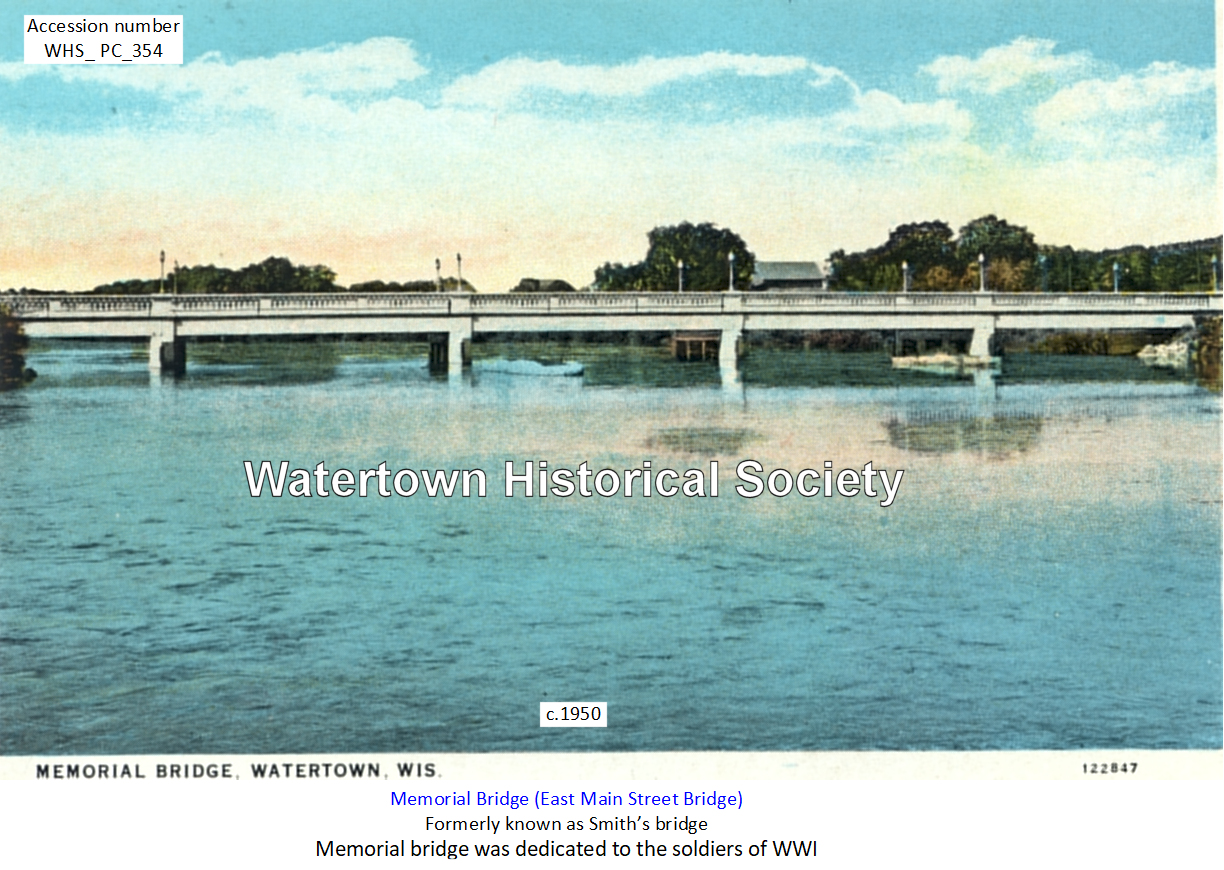
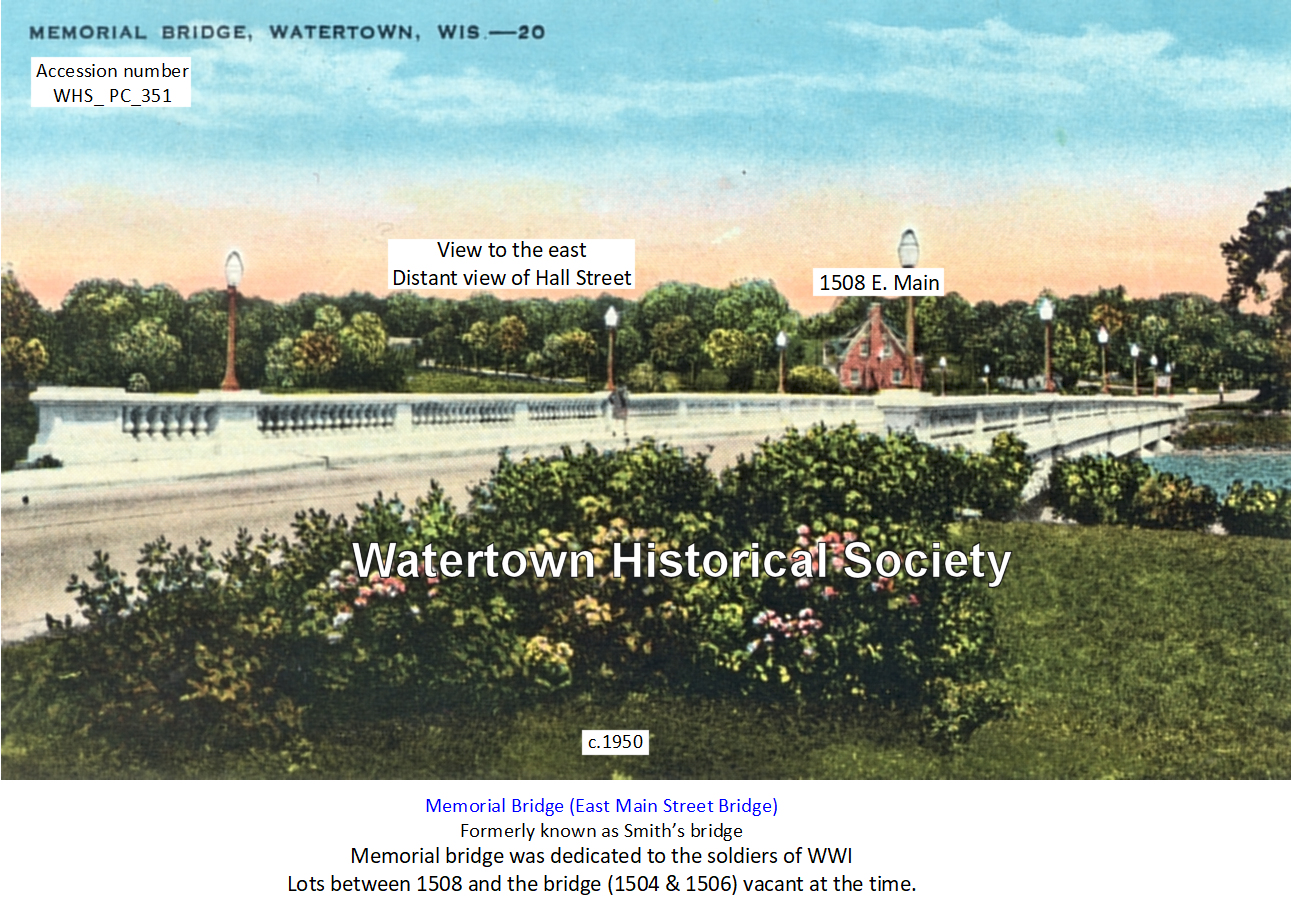
new Memorial bridge, dedicated to the
soldiers of the world war, was opened this week with impressive ceremonies
in which Highway Commissioner Hirst and other noted leaders took part. The new bridge, which is built of concrete,
spans the Rock River on the east side of Watertown and travelers over highway
19 will be using it as a means of travel.
The bridge, which is considered one of the most beautiful structures of
the kind in this part of Wisconsin, is ornamented with large pillars topped off
with twenty-four large electric globes, the light of which can be seen from a
great distance.
A
feature of the bridge’s opening was the presence of Marshall J. Woodard, pioneer resident of
this city, who forded the Rock River at the spot where Woodard, who is 93 years
old, was the first man to drive across the new bridge. He is one of the oldest and best known
residents of this city and was one of the early day bankers in this city.
Quite
different were the surroundings at the opening of the new bridge this week than
those which existed in 1855, when Mr. Woodard first came to this section. Mr. Woodard was born in New London, N. J., in
1830 and in 1855 he came to Wisconsin and settled in Oak Grove, Dodge
County. He came to Milwaukee by boat and
from there to this city by ox team.
In
speaking of his experiences at the services, Mr. Woodard recalled many things
of interest – the wild surroundings of this section when he first came here,
the lack of modern comfort, the eagerness and hard work of the settlers, the
primitive conditions in all parts of the county, and the utter lack of modern
essentials.
1931
MEMORIAL DAY CEREMONY / Lest We Forget
Silently a group of high
school students stood mingled with strangers near Memorial Bridge, patiently
waiting for the long awaited event. Five
or ten minutes passed and then out of the quiet air a sound of a band was
heard. Then all eyes and ears were
alert. The Cavalry Band led the
procession. When about one third of the
parade had crossed the bridge, the people of the parade stopped, the band
played “The Star Spangled Banner,” the flags went up; hats went off and a
beautiful wreath was dropped from a hovering airplane into the water. The spectators then regained their breath and
the old men, who had lived through those perilous years, wiped an unashamed
tear away. T he remaining parade consisting of boys
and girls from Junior High, the Boy Scouts, Girl Scouts, and shining
automobiles finished the [Memorial Day] procession that led to the Oak Hill Cemetery. The Blue and White, 06 1931, Published by the Students of Watertown High
School.
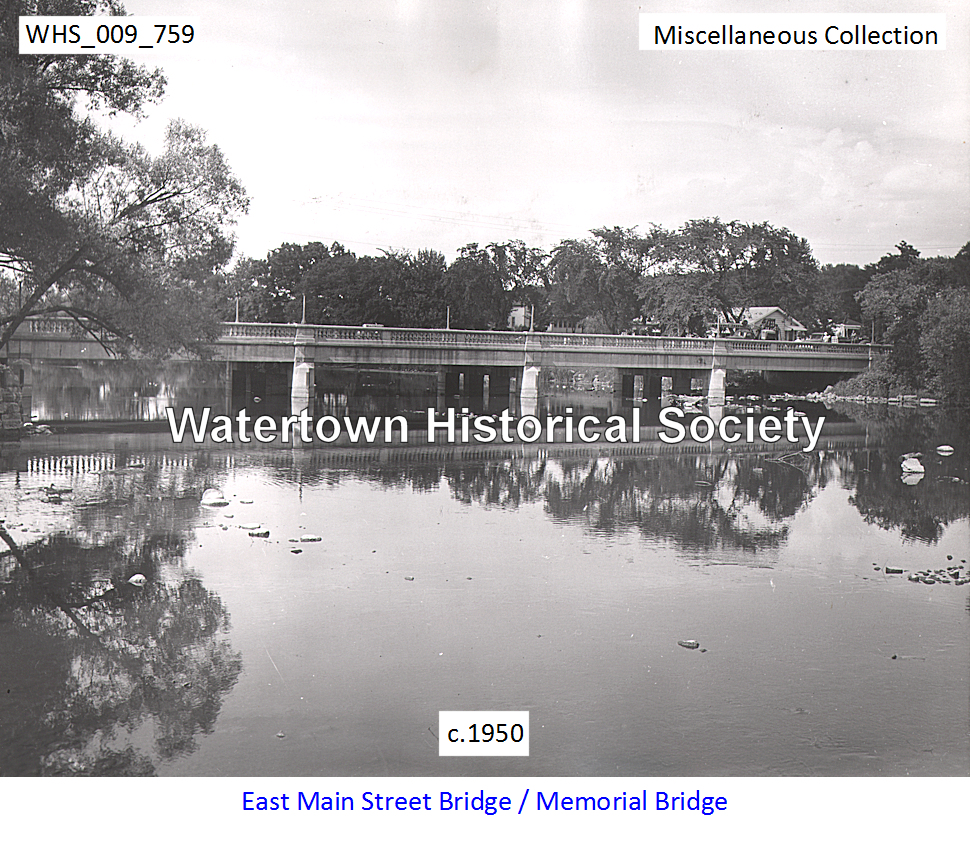
c.1950
1963
08 07 Repairs and replacements, including new railings and lights, are being made on Memorial bridge which
crosses Rock river near Tivoli Island. At this week’s meeting of the common council
additional work to restore the center area of the bridge was authorized. It will be necessary to close the bridge when
that phase of the work is undertaken. It
will require about two weeks once that gets started and it will be necessary to
reroute traffic. The Boughton bridge
route is under discussion for such usage when the time comes.

History of Watertown,
Wisconsin