website watertownhistory.org
ebook History of Watertown, Wisconsin
Miller Cigar Factory
Adolph Friedrich Miller [Müller] 09 1834, Diepholz—10
30 1901, USA
1834-1901
314 E Main (Fourth & Main)
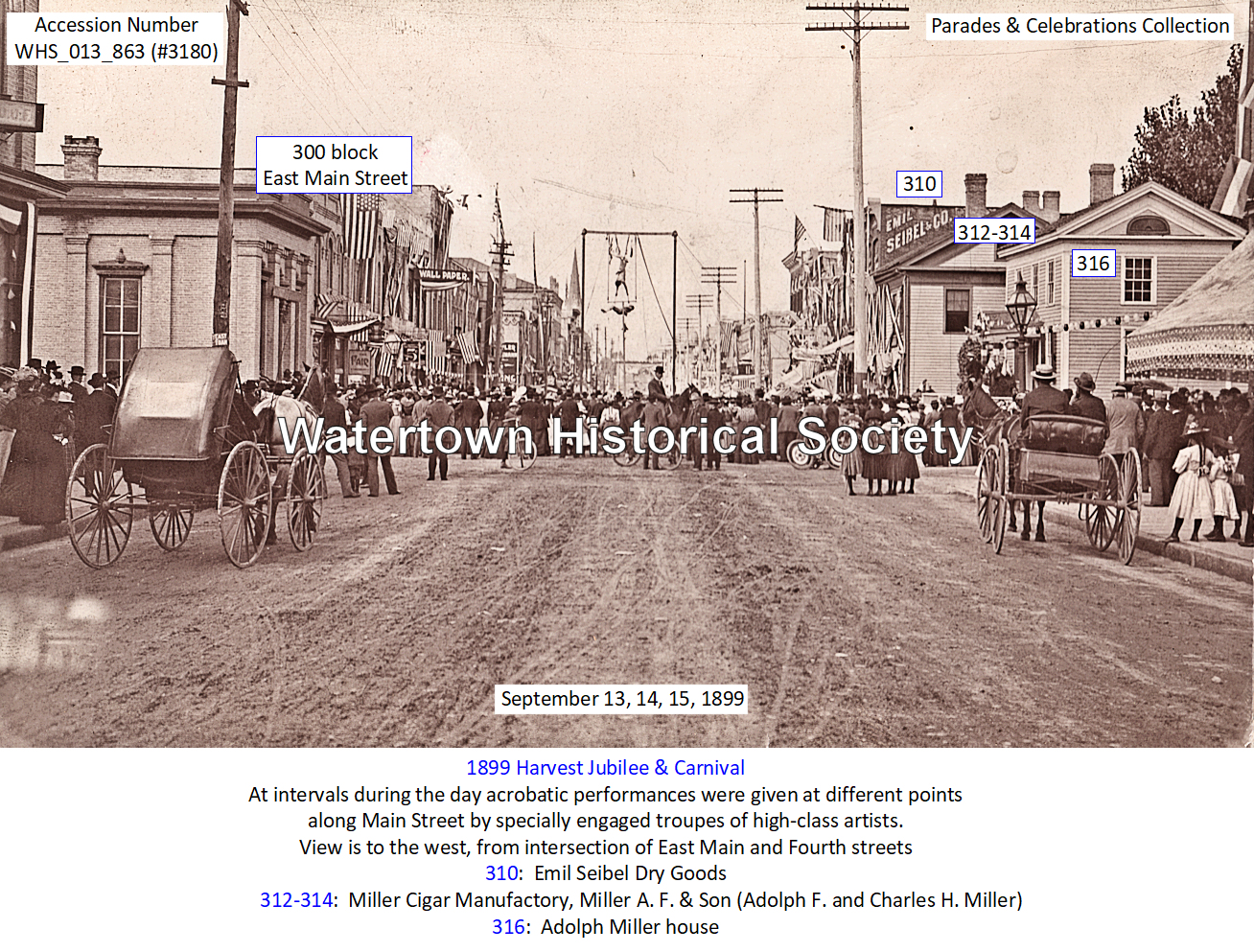
Main, E, 316 1898, Adolph Miller house,
WHS_004_NT_063
Reminiscences of Early Days in Watertown, Jacobi
In the
pioneer days, the manufacture of cigars, not alone here, but everywhere, was in
the hands of men who were driven by the revolution of 1848-49 from their
fatherland. We here in Watertown had a
large colony of such men, mostly highly educated and who were not afraid to
take hold of anything to make an honest livelihood.
In the
fifties and sixties the following cigar factories were established here,
namely: Bernhard & Rothe, Ernst and Carl Grossmann, August Tanck, Charles T. Lotz, Charles and Hugo Juessen,
Eugene Wiggenhorn, later Wigrenhorn Bros., Ade & Broeg, Squire Dacasse, Bernhard Miller, A. F.
Miller and a few others.
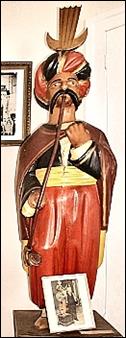
Miller Cigar Store “Turk” Resides at
Octagon House
Carved in 1860’s
Normally
a wooden effigy of a Native American holding a cluster of cigars
was
used as the emblem of a tobacconist, not that of a Turk
Visitors
to Watertown’s famed Octagon House can see, among other things, a relic of the
Wooden Indian age.
Only in
this instance it is not a wooden Indian they’ll be seeing, but a carved wooden
Turk. The Turk was presented to the
Watertown Historical Society some years ago by the Miller family of Watertown,
for several generations operators of a cigar factory here.
The
wooden Indians and also some other figures, such as the Turk, were once quite
common and occupied a place in or in front of cigar stores. Watertown had several of them, most of them
figures of Indians or Indian chiefs.
Today they are a collector’s item and many of them have been bought up
for private collections. Even today an
occasional inquiry is made in Watertown by representatives of dealers and
collectors who visit Watertown “scouting” for any stray wooden Indians that may
have escaped the eye of previous inquirers.
The
Turk, carved from a solid block of wood, was in the Miller family since the
1860’s and was purchased by the late A. F. Miller, father of the late Charles
H. Miller under whom the family cigar business here continued until it was
taken over by the grandson, the late Edgar C. Miller under whom the business
was finally liquidated.
Before
1870, many wooden Indians and other heroic figures were carved in Milwaukee for
cigar manufacturers. It was there that
Mr. Miller bought his Turk.
Wooden
Indians, however, date back to England as early as the reign of King James I.
There
is pictorial evidence that a wooden Indian was in existence in the year 1617,
the year Pocahontas died, the year prior to Sir Walter Raleigh’s beheading and
only 12 years after the celebrated Gunpowder Plot of Guy Fawkes.
In the
United States wooden Indians were used in front of cigar stores as early as
1780.
Among
owners of wooden Indians here – not Turks – were Schlueter Bros., and Walter Kuenzi who operated cigar manufacturing concerns in the
city.
Abstracted
from WDTimes 08 05 1966
Wooden
Indians once stood in front of cigar stores and tobacco shops. Watertown had several of them at the turn of
the century and much later, but at the moment they have all disappeared, some
gathered up by collectors while others just disappeared without a trace.
Watertown
still has one of the huge carved figures which stood in front of the old Miller
Cigar store at Main and North Fourth Streets, now part of the F. W. Woolworth
Co. store. But this last remaining
figure of a past era in Watertown is not actually an Indian; it’s a Turk.
Members
of the Miller family presented the Turk to the Watertown Historical Society
years ago and he is now at the Octagon House.
The Miller
family operated a cigar factory here for several generations.
The
Turk, carved from a solid block of wood, was in the Miller family since the
1860’s and was purchased by the late A. F. Miller, father of the late Charles
H. Miller under whom the family cigar business here continued until it was
taken over by the grandson, the late Edgar C. Miller under whom the business
was finally liquidated.
Before
1870 many wooden Indians and other heroic figures were carved in Milwaukee for
cigar manufacturers. It was there that
Mr. Miller bought his Turk.
Among
owners of wooden Indians here— not Turks—were Schlueter Bros., and Walter Kuenzi who operated cigar manufacturing concerns in the
city.
______________________________________________
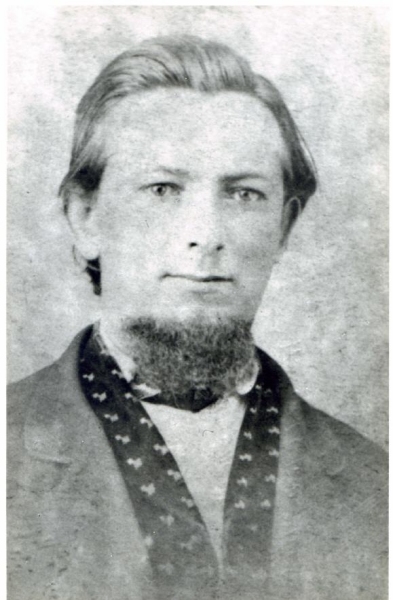 Adolph
Miller left Diepholz about 1850 and moved to
Watertown, Wisconsin. He founded a cigar
company and got a well known member of his town.
Adolph
Miller left Diepholz about 1850 and moved to
Watertown, Wisconsin. He founded a cigar
company and got a well known member of his town.
Whom
he married is unknown but a photo of his two children was sent to the German
tree of the family.
Last
information is that a descendent of Adolph Miller moved to Corpus Christi,
Texas. Children: Charles and Bertha Miller.
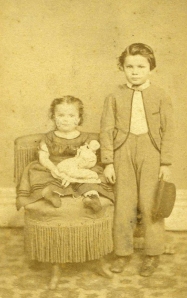
WHS_005_968
Bertha
and Charles Miller
______________________________________________
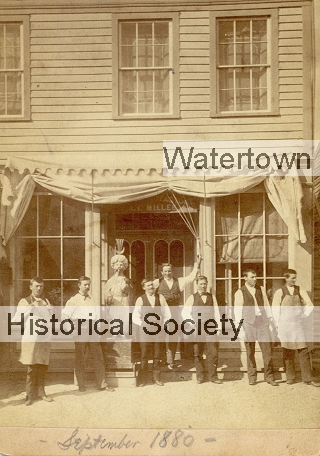
WHS_006_597
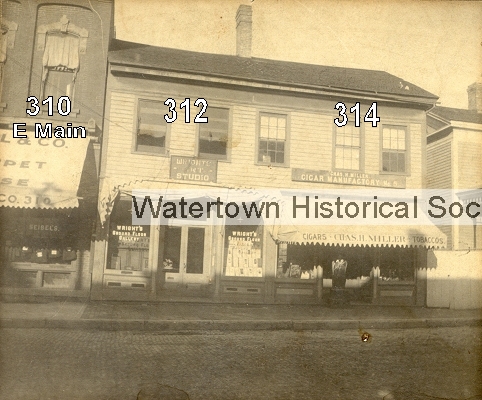
WHS_006_600
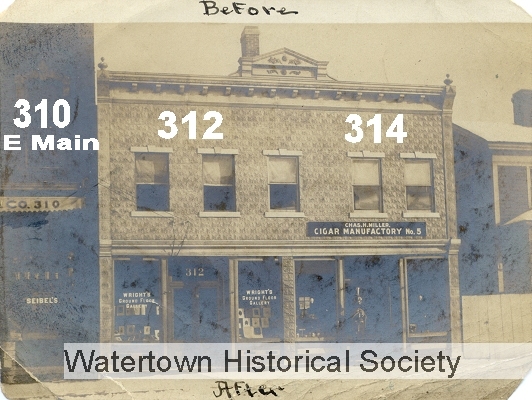
WHS_006_599
310 E
Main, Emil Seibel dry goods, post remodel, c1910
312 E
Main, Wright's Art Gallery, post remodel, c1910
314 E
Main, Miller Cigar Manufactory, Charles A, post remodel, c1910
Pedigree (PDF file)
where you can see the roots back to about 1600.
In the
1860 Adolf Friedrich Miller left Diepholz
Germany to settle in Watertown. He had
two children Charles and Bertha. Was
owner of a cigar manufactory in Watertown.
We know also about a lost brother who may have died in the Civil War
called Carl or maybe Charles Miller in the English version. He was born 19.12.1840 in Diepholz. His full German name is Carl Diedrich
Mueller.
1847
The Miller home was one
of the oldest landmarks in Watertown and was erected in 1847 by William Holsen. In 1848 the property was acquired by the
late Ernst Achilles, father of Mrs. A. F. Miller.
1861
09 17 In 1861 A.
F. Miller occupied the second story of the Miller House as a cigar factory,
which was discontinued in this building after two years, and the factory was
removed to its present [1909] quarters.
Mrs. A. F. Miller has lived in this residence continuously for over
fifty years. WG
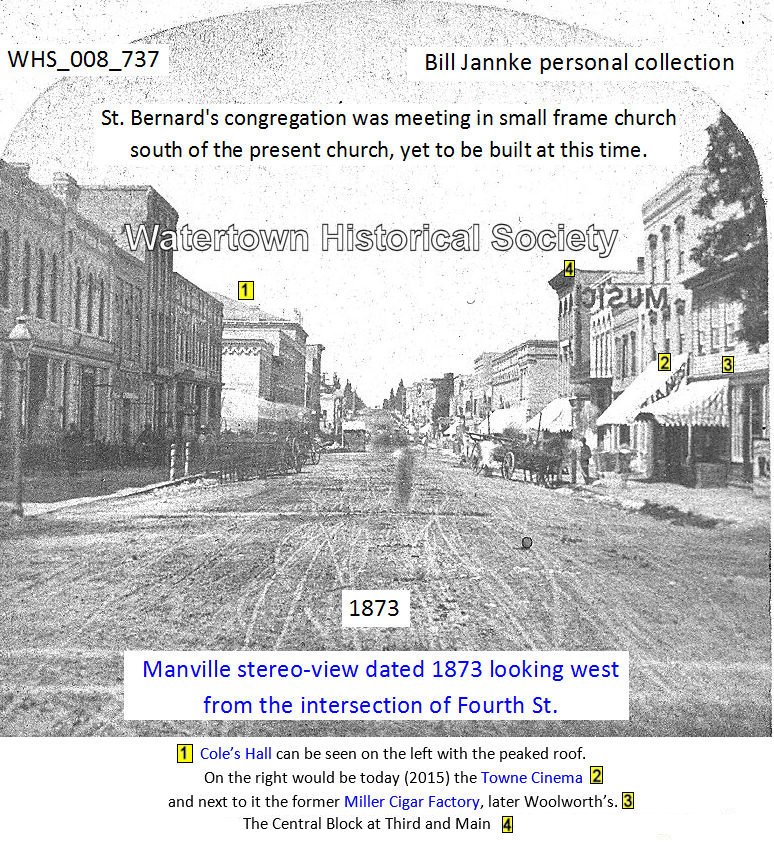
1873
EARLY VIEW OF
1899
1901
ADOLPH MILLER, b. 1834, d. 1901.
Buried
in Oak Hill Cemetery
1908
10 02 Charles H. Miller's [son of Adolph] cigar
factory was entered by burglars. WG
1909 Old Landmark Sold
09 17 The Miller
residence, Main and N. Fourth streets [316 E Main], was sold to H. Davies, who
will remove it to a vacant lot at 312 North Second Street [current location of
City Hall]. The building is one of the
oldest landmarks in Watertown and was erected
in 1847 by William Holsen. In 1848 the property was acquired by the late
Ernst Achilles, father of Mrs. A. F. Miller.
In 1861 A. F. Miller occupied the second story as a cigar factory,
which was discontinued in this building after two years, and the factory was
removed to its present quarters.
Mrs. A. F. Miller has lived in this residence continuously for over
fifty years. WG
1937 Philip
J McCarthy took over the Miller Cigar business.
Cross
References:
William
Schlueter was employed at Millers.
Walter A.
Schimmel became associated with the Tri-County Tobacco Co., formerly the
Miller Cigar Co.
Albert P. Benke
(1870–1944) in early life was a cigar maker, working for the Miller Cigar Co.
and later for Schlueter Bros., before going into the floral business.

History of Watertown,
Wisconsin